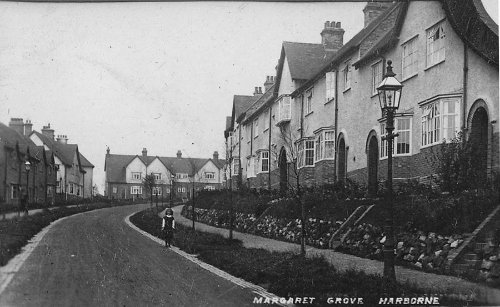
The Moor Pool Estate in Harborne stands as a remarkable example of the “Garden Suburb” movement, designed to provide healthy and aesthetically pleasing living conditions for working-class families.
The visionary behind the dream
Moor Pool Estate’s establishment was largely due to the vision of John Sutton Nettlefold (1866-1930), a prominent Birmingham city councillor and chairman of the Housing Committee, who was inspired by Ebenezer Howard’s Garden City concept.
The idea for Moor Pool gained momentum in 1906 when the abandonment of a proposed tramway project led to a drop in local land values, making a large-scale development feasible. In June 1907, preliminary meetings were held, and Harborne Tenants Limited (originally Harborne Tenants Association) was formally registered on 15th October 1907, under the Industrial & Provident Societies Act. This co-partnership housing scheme allowed individual tenants to buy shares in the estate company, fostering a sense of ownership and community.
Creating an Arts and Crafts paradise
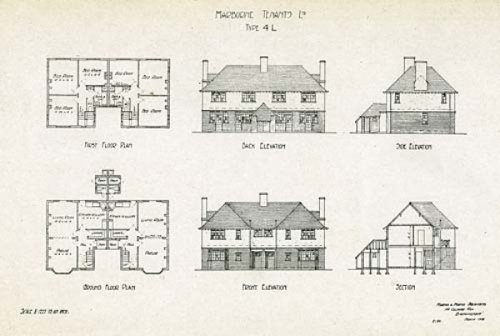
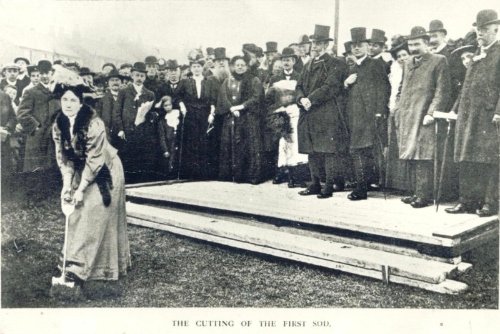
The first sod was cut on 26th October 1907 by John Sutton Nettlefold’s wife Margaret, marking the official start of construction. The first house was completed and opened on 24th May 1908. The estate was designed by the architectural firm Martin & Martin, creating approximately 500 houses across 54 acres, adhering to the principles of the Arts and Crafts style.
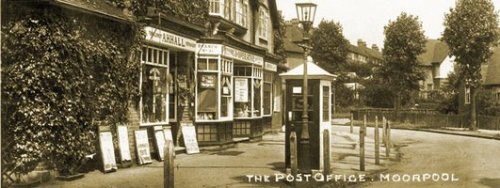
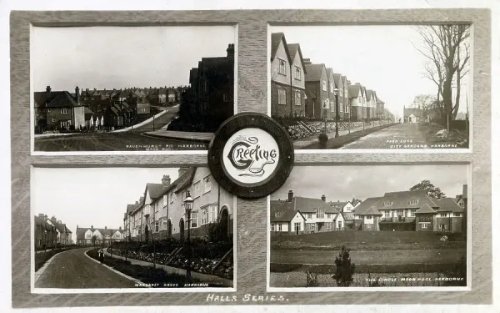
Nettlefold’s vision included not just houses, but a comprehensive array of shared facilities designed to improve physical and social well-being. Moor Pool Hall opened on 5th November 1910, featuring a unique Edwardian skittle alley and snooker tables; numerous parks, tree-lined avenues, grass verges, and a central pond, “the Moor Pool” itself; sporting facilities were integral to the design, promoting active lifestyles; allotments were interspersed throughout the estate, rather than centralised, encouraging residents to grow their own produce and adding to the semi-rural feel and reflecting the prevailing social reform ideals of the time, the estate was designed without pubs.
A model for the world
The construction of Moor Pool Estate was largely completed by 1912. It quickly became celebrated as a model for urban planning and social housing, providing a stark contrast to the overcrowded back-to-back housing prevalent in much of industrial Birmingham. In 1970, the Moor Pool Estate was designated a Conservation Area, recognising its unique historical and architectural significance. However, over the years, the original co-partnership model faced challenges and, after numerous changes in ownership, in 2014 Grainger plc announced plans to sell off the cherished community amenities. In response, the local community rallied, forming the Moor Pool Heritage Trust (MPHT). Through a successful fundraising campaign, including a Heritage Lottery grant and generous local donations, the MPHT managed to acquire ownership of the community assets.
Today, Moor Pool remains an almost completely intact example of a garden suburb. The Moor Pool Heritage Trust continues its vital work of preserving and managing these historic assets, ensuring that Nettlefold’s original vision of a flourishing, community-oriented neighbourhood endures for future generations.