The visionary who put Birmingham on the medical map
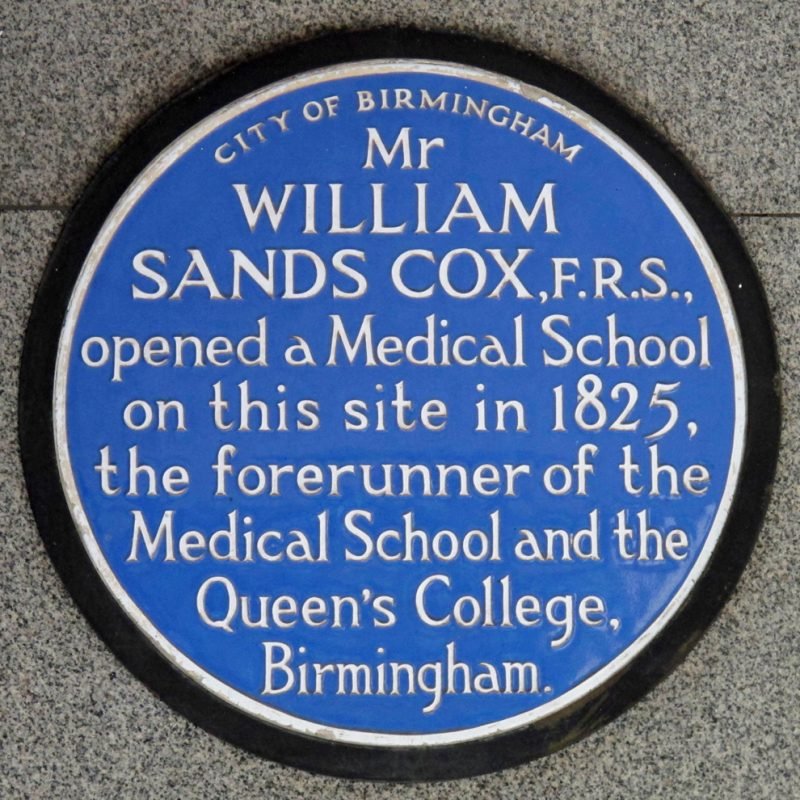
Address: House of Fraser, Temple Row, B2 5BN
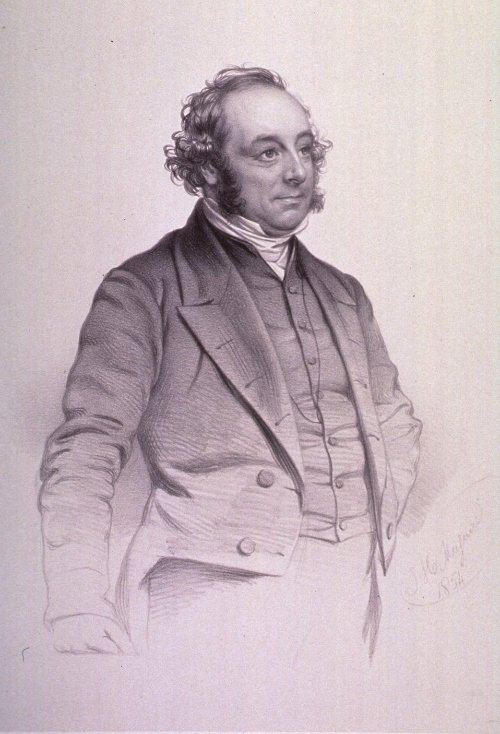
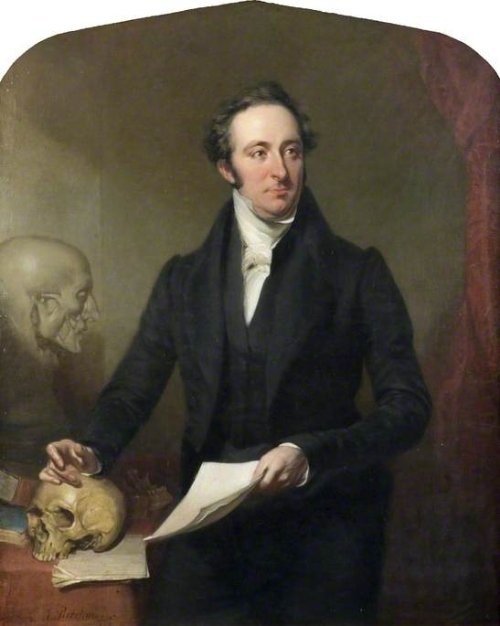
William Sands Cox was a pivotal figure in the history of medicine and education in Birmingham, best known for founding the Birmingham Royal School of Medicine and Surgery, which ultimately evolved into the Faculty of Medicine at the University of Birmingham.
The young revolutionary Born in Birmingham in 1802, William Sands Cox was the son of Edward Townsend Cox, a respected surgeon. He received his early medical training at the United Hospitals of Guy’s and St Thomas’ in London and later studied in Paris. Returning to Birmingham, he recognised the pressing need for a dedicated medical school in the rapidly growing industrial city. At the time, medical education was largely informal, relying on apprenticeships and hospital-based lectures.
In 1825, at the remarkable age of just 23, Sands Cox boldly established the Birmingham School of Medicine and Surgery. He personally financed its initial operations, converting his father’s house in Temple Row into lecture rooms and anatomical theatres. This pioneering institution was the first medical school in England outside London and the ancient universities. The school quickly gained a reputation for its practical approach to medical education, combining theoretical knowledge with clinical experience. It expanded steadily, attracting students from across the country. Sands Cox’s vision was to create a centre of medical excellence that would serve the burgeoning population of the Midlands. His tireless efforts led to the school’s eventual amalgamation with Queen’s College in 1843, and later, its absorption into the University of Birmingham.
The price of vision Beyond his role as an educator, Sands Cox was also a practising surgeon at the General Hospital and Queen’s Hospital in Birmingham. He was a Fellow of the Royal Society and a Fellow of the Royal College of Surgeons. Despite his achievements, he faced financial difficulties later in life due to his substantial investment in the medical school and other ventures. Cox was described as “autocratic” in his leadership and encountered several disputes damaging his reputation and that of Queen’s College. An inquiry led by the charity commissioners in 1860 led to the severance of Queen’s College and Queen’s Hospital, after which, Cox ceased to be involved with either.
Lasting legacy William Sands Cox died in 1875. His enduring legacy is the robust medical education and healthcare infrastructure that grew from his initial, ambitious undertaking. He transformed Birmingham into a leading centre for medical learning, and his pioneering spirit continues to be recognised as fundamental to the city’s academic and medical history.
Image Gallery
More Information
For further information about William Sands Cox, please see selective links below.