Giving Birmingham the space, confidence and platform to tell its own story — past, present and future.
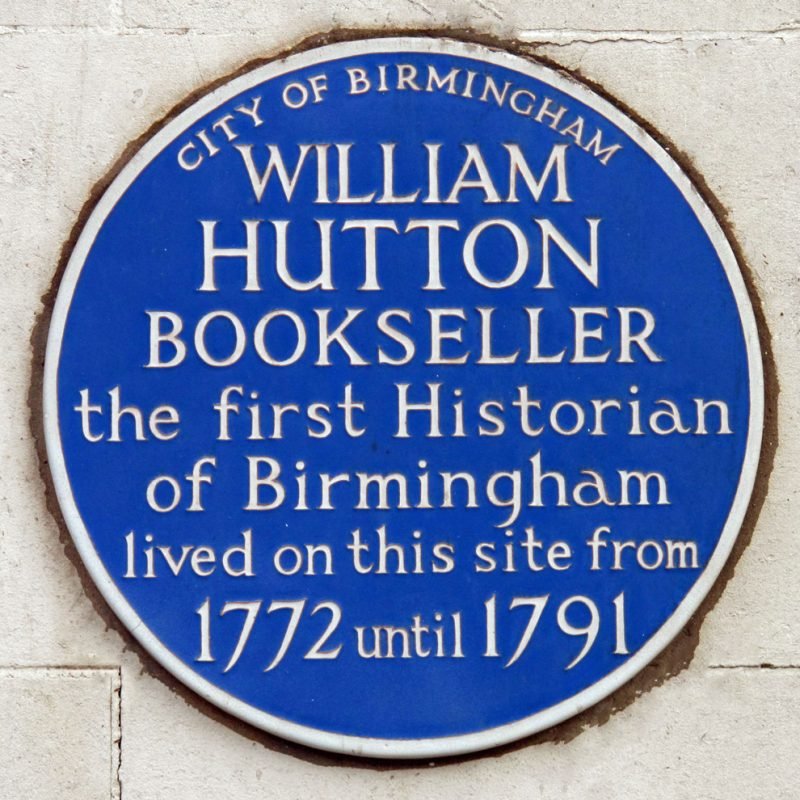
Blue Plaque: William Hutton
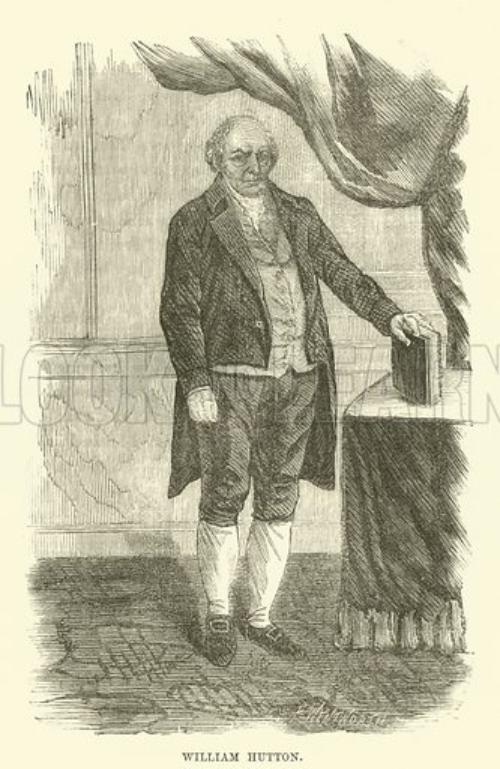
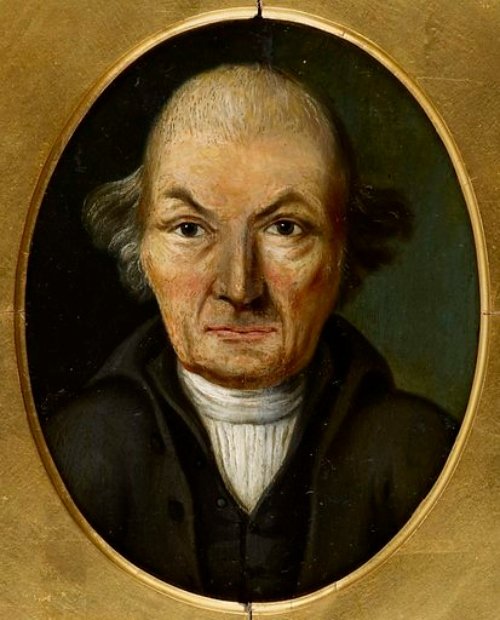
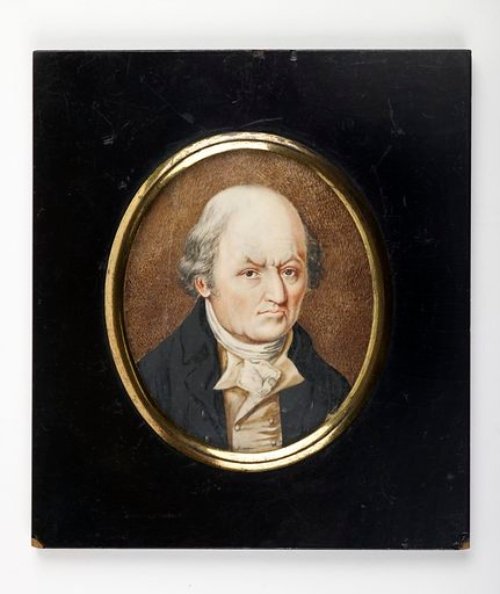
William Hutton (30/09/1723 - 20/09/1815)
Birmingham's first historian and the man who wouldn't give up
Blue Plaque Awarded: by City of Birmingham, date unknown Address: Waterstones, High Street (facing New Street), B4 7SL
William Hutton was a significant English historian, poet, and entrepreneur, recognized for writing the first comprehensive history of Birmingham.
From child worker to Birmingham’s memory keeper Born in Derby, William Hutton began working at a young age, starting an apprenticeship in a silk mill at seven. After a second apprenticeship as a stocking maker in Nottingham, he taught himself bookbinding. In 1750, Hutton moved to Birmingham and opened a small bookshop. His entrepreneurial spirit led him to establish Birmingham’s first paper warehouse in 1756, which proved to be very profitable. This success enabled him to acquire properties, including a country house in Washwood Heath and a house in High Street. He was also instrumental in creating Birmingham’s first circulating library.
Building Birmingham’s literary life Hutton’s literary legacy is primarily anchored in his seminal work, A History of Birmingham, published in 1782. This was the first detailed history of the rapidly growing industrial town and earned him election as a Fellow of the Antiquarian Society of Scotland. He also held various public offices in Birmingham, serving as an overseer of the poor and, for 19 years, as a commissioner to the Court of Requests, a small claims court where he handled over 100,000 cases.
The man who wrote Birmingham’s story His life was significantly impacted by the Birmingham Riots of 1791 (also known as the Priestley Riots), during which both his home and business premises were destroyed. He documented this experience in his Narrative of the Riots and successfully claimed damages against the town. Beyond his historical writing about Birmingham, Hutton was also an avid traveller and author of several other works, including The History of the Roman Wall (1802), which documented his 600-mile walk along Hadrian’s Wall in 1801 at the age of 78, making him generally considered the first person in modern times to walk its entire length. He also wrote an autobiography, The Life of William Hutton, which was published posthumously by his daughter, Catherine Hutton, who also became a writer. William Hutton died in 1815 at the age of 91.
Image Gallery
More Information
For further information about William Hutton, please see selective links below.