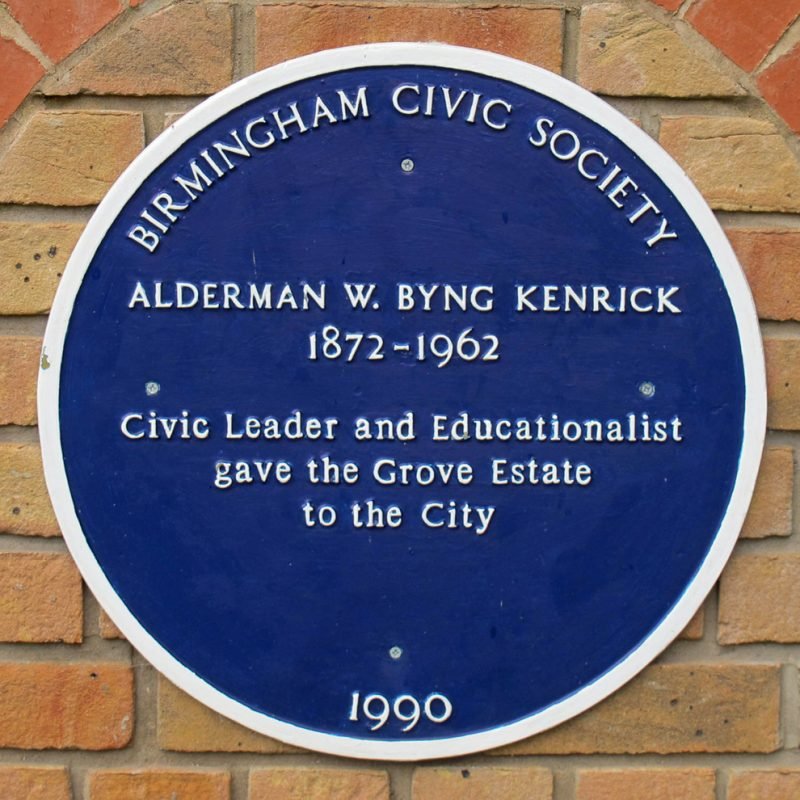
Byng Kenrick was a prominent Birmingham civic leader, businessman, and educational reformer. He was a member of the influential Kenrick family, a distinguished Unitarian family deeply rooted in Birmingham’s industrial and political life, related through marriage to the Chamberlain family.
From Oxford to council chambers
Born in Birmingham, Byng Kenrick was educated at Rugby School and Balliol College, Oxford. After university, he joined the family firm, Archibald Kenrick & Sons, a successful hardware manufacturing business in West Bromwich, eventually becoming its chairman until 1953. Kenrick’s true passion lay in public service and he was elected to Birmingham City Council in 1914, representing the Edgbaston ward, a position he held for an impressive 47 years.
Educational revolutionary
Kenrick served as Chairman of the Education Committee from 1922 to 1928 and again in 1931 to 1943, a critical period during which he oversaw significant expansion and reform of the city’s schooling system. He also played a key role in the establishment of the Birmingham Central School of Arts and Crafts. He was a long-serving deputy Pro-Chancellor of the University of Birmingham during the period that included the challenges of World War II and post-war reconstruction. He was instrumental in guiding the university’s growth and development, including the expansion of its academic programs and facilities. He also served as President of the Birmingham and Midland Institute and was a governor of King Edward’s School.
Lord Mayor and cultural patron
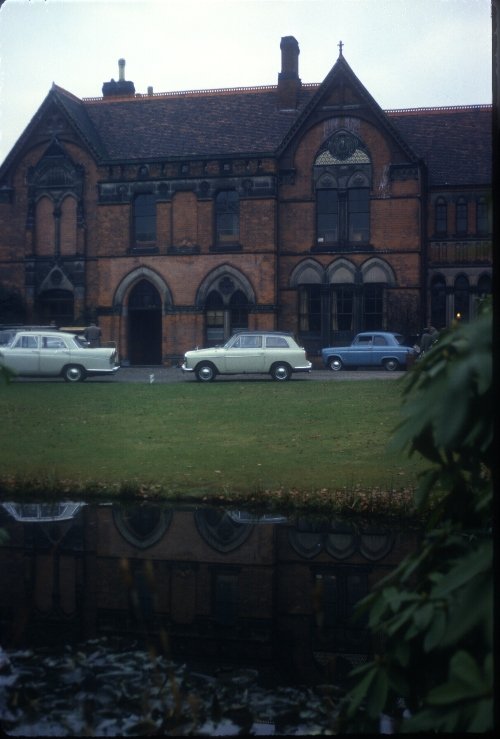
Beyond education, Kenrick held various other important civic roles. He was Lord Mayor of Birmingham from 1928 to 1929, a period during which he continued to champion civic improvements. He was also a keen supporter of the Birmingham Repertory Theatre and the City of Birmingham Symphony Orchestra. He was also Chairman of the Central Council for School Broadcasting, reflecting his interest in using new technologies for educational purposes. He was made an honorary freeman of Birmingham in 1952, a testament to his profound and lasting contribution to the city. The Kenrick’s family home, The Grove, was demolished in 1963 and the grounds donated to the city became Grove Park, Harborne.
Alderman Byng Kenrick died in Edgbaston at the age of 88. His legacy is etched into the fabric of Birmingham’s educational institutions and its civic life, building upon the family tradition of public service and improvement.