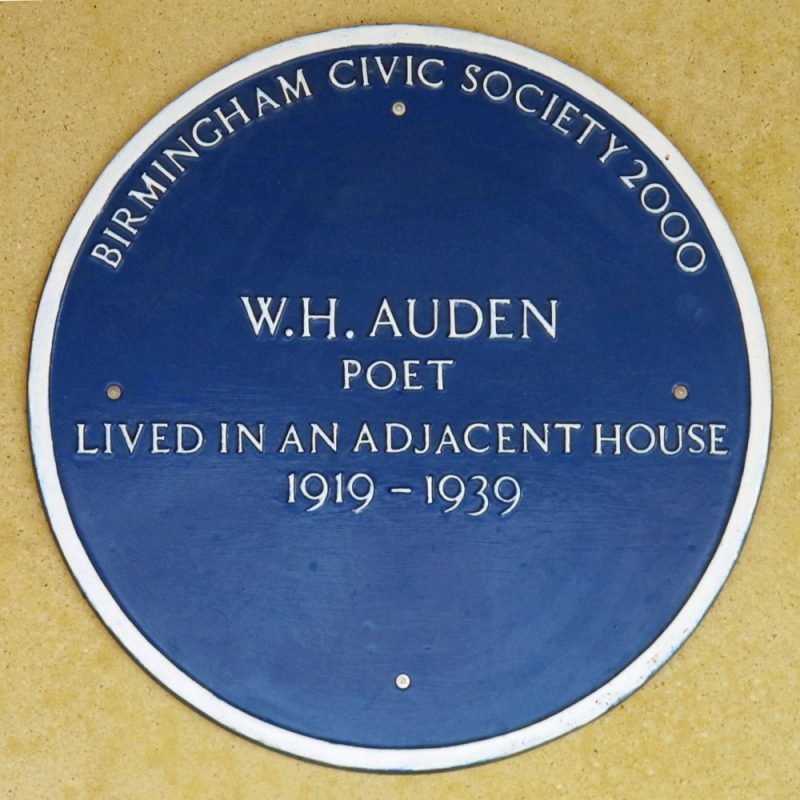
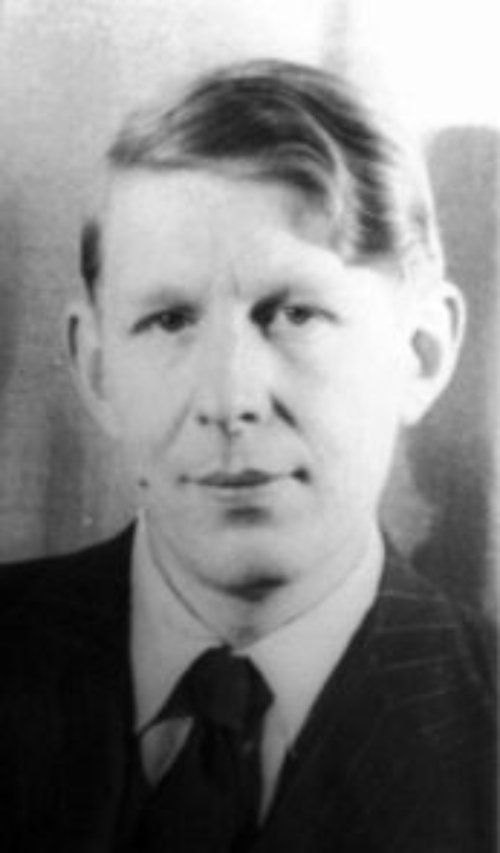
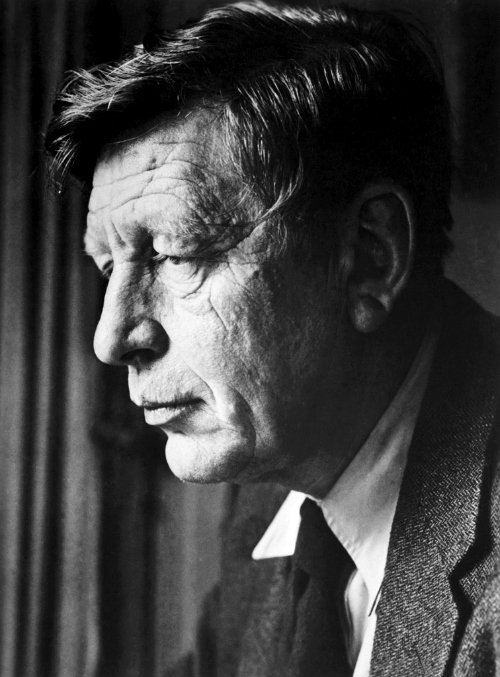
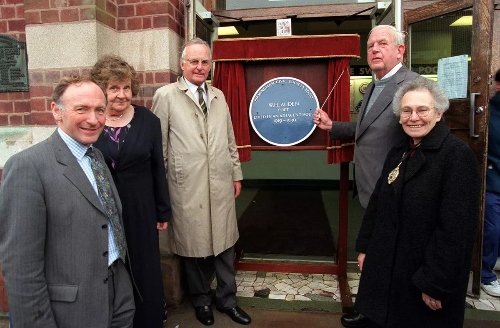
W H Auden was one of the most influential and celebrated poets of the 20th century, though his connection to Birmingham is often overlooked.
Birmingham childhood
Born in York on 21st February 1907, Auden’s family moved to Solihull, then a village just outside Birmingham, in 1908, when his father became the School Medical Officer for the city. His childhood in the Midlands, with its blend of urban and rural landscapes, left an impression on his early poetry. He famously mentioned the Solihull gasworks in his later work, reflecting on its “numinous” quality from his childhood. While he left the immediate Birmingham area for boarding school and later Oxford University, the city remained a part of his early life’s backdrop.
Literary breakthrough
Auden’s career exploded in the 1930s, establishing him as a leading voice of a new generation. His early work was deeply engaged with political and social themes, often displaying a sharp wit and technical virtuosity. He collaborated with Christopher Isherwood on several plays and travelled widely, including a period in Berlin and a controversial visit to Spain during the Civil War.
Transatlantic success
In 1939, Auden emigrated to the United States and became an American citizen in 1946, though he retained his British nationality. His later work saw a shift towards more religious and spiritual themes. He continued to write prolifically, producing renowned poems like “The Age of Anxiety,” for which he won the Pulitzer Prize in 1948, and the widely loved “Funeral Blues,” popularised in the film Four Weddings and a Funeral.
Academic and literary honour
Auden divided his later life between residences in New York City and Austria, and for a period, held the prestigious position of Professor of Poetry at Oxford University. Auden’s career has undergone much reevaluation in recent decades – while some critics have contended that he wrote his finest work when his political sentiments were less obscured by religion and philosophy, others defend his later material as the work of a highly original and mature intellect. He was awarded the National Book Committee’s National Medal for Literature in 1967 and died in Vienna in 1973.
Hear WH Auden read his poem “As I Walked Out One Evening” portraying Bristol Street as an urban countryside, in which the crowds on its pavements represent the city’s ‘harvest’.