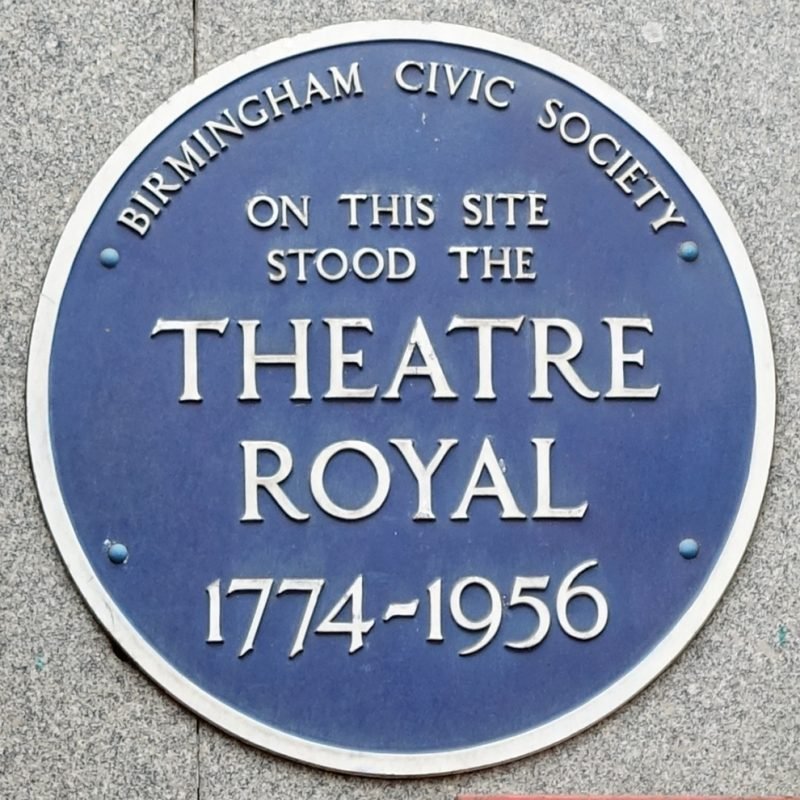
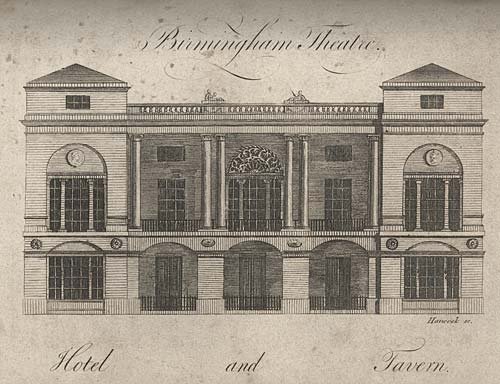
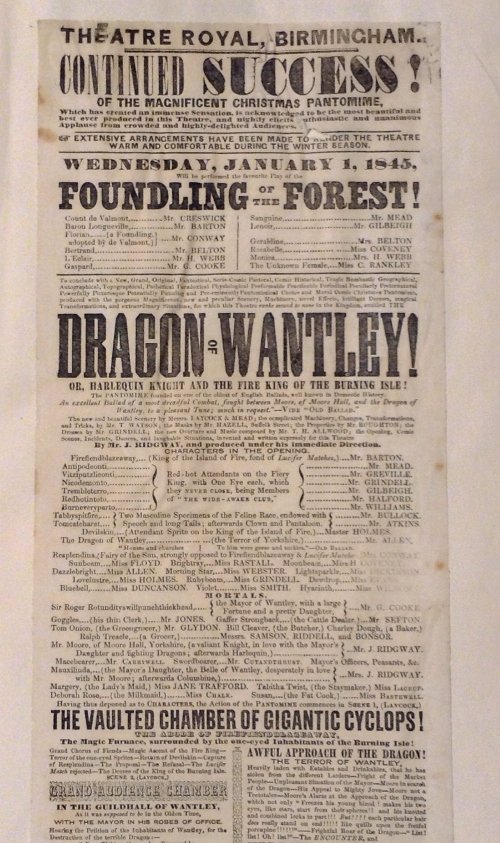
The Theatre Royal in Birmingham was a significant and long-standing landmark in the city’s cultural landscape, for many years the city’s premier theatrical venue, hosting a wide range of productions and becoming a central part of the city’s entertainment scene.
The original theatre (1774-1792)
The first theatre on the site, initially known as the New Street Theatre, was erected in 1774. Its construction was met with some opposition from local manufacturers who feared it would promote “negligence” and “corrupt the morals of the industrious” among the working classes who predominantly frequented the theatre. Despite this, it quickly became a popular destination. To circumvent licensing laws that restricted performances of serious drama, it often advertised evenings of music interspersed with sketches and dances.
Rising from the ashes (1794-1820)
In 1792, this theatre suffered damage from a fire, believed to be arson. It was rebuilt and reopened in 1794. The theatre achieved a significant upgrade in 1807 when it was granted a royal patent, allowing it to perform all types of drama, including Shakespeare. From this point, it officially adopted the name Theatre Royal.
Samuel Beazley’s masterpiece (1828-1902)
Another destructive fire struck in 1820, leading to a further rebuilding. The Theatre Royal that emerged in 1828, designed by Samuel Beazley, was a grander structure. This iteration of the theatre thrived throughout the Victorian period, becoming a major venue for touring companies and celebrated actors of the era. Charles Dickens’ Amateur Theatrical Company even performed there in 1848 as part of his fundraising efforts for Shakespeare’s house in Stratford-upon-Avon.
Runtz’s modern marvel (1904-1956)
However, the Theatre Royal was not immune to change. By the turn of the 20th century, the 1828 building was deemed outdated. It was demolished in 1902. A new, fourth Theatre Royal, designed by Ernest Runtz, rose in its place, reopening in 1904 with a larger capacity of 2,200 seats. This final version of the Theatre Royal continued to entertain Birmingham audiences for over five decades.
Sadly, the post-World War II period saw shifts in entertainment preferences, with cinema gaining dominance. The Theatre Royal closed its doors for the final time in 1956 and was subsequently demolished. The site on New Street was redeveloped, and is now occupied by retail premises.