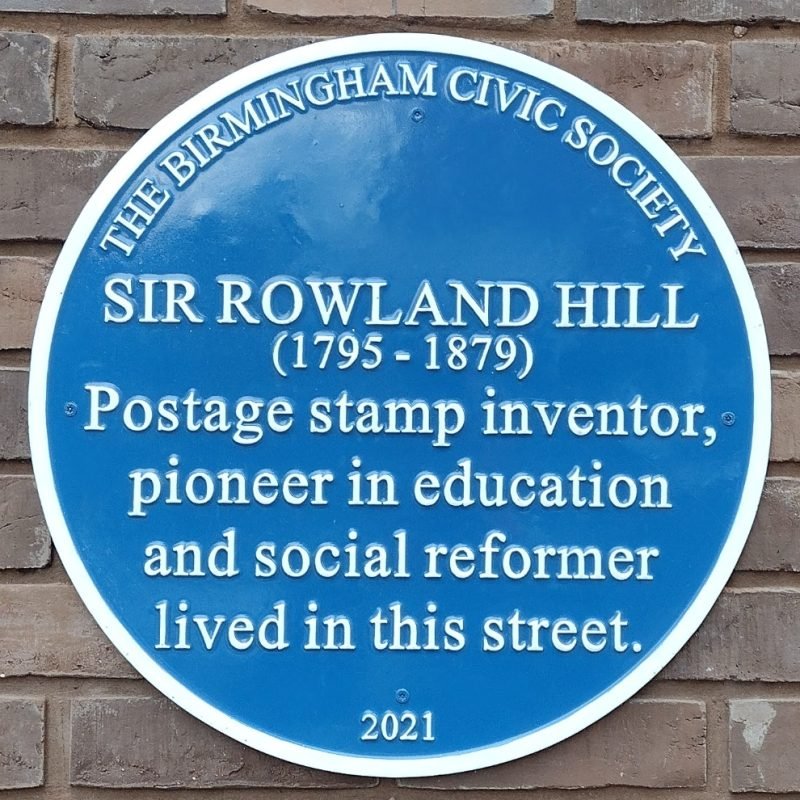
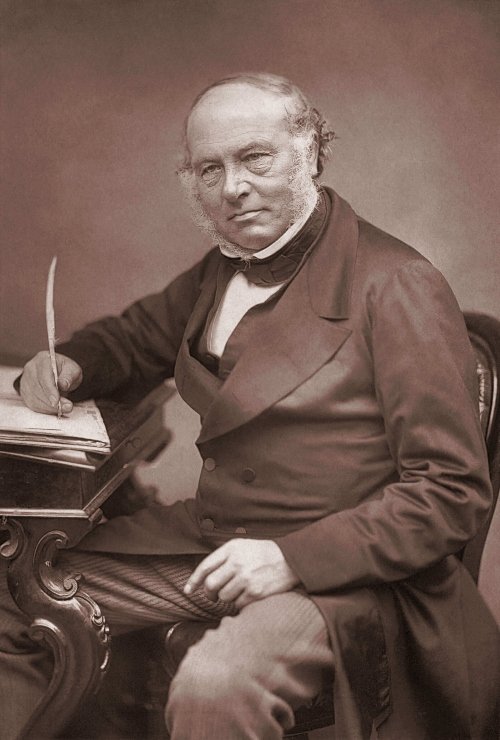
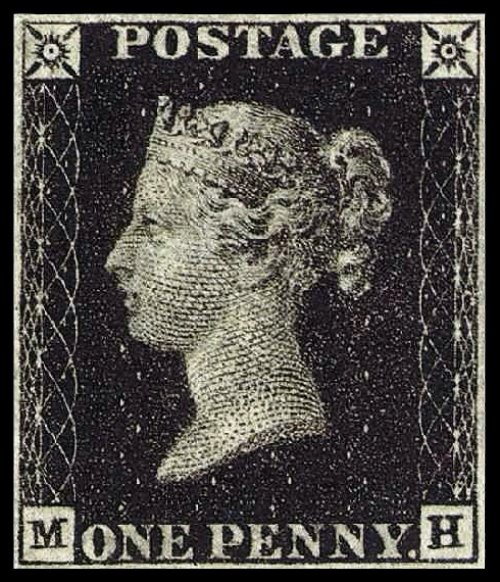
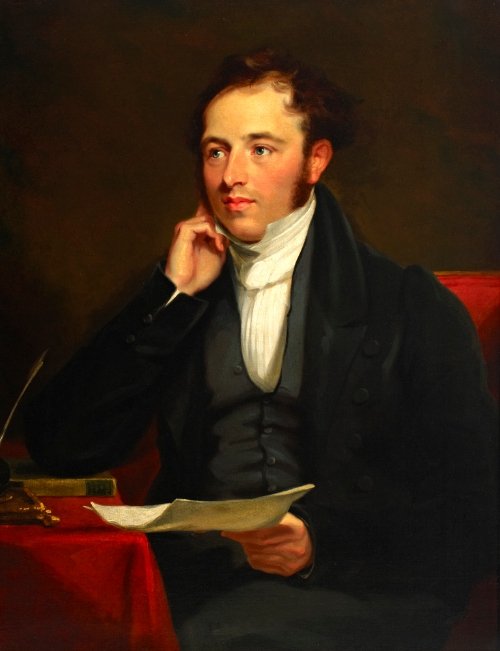
Sir Rowland Hill was a pioneering English teacher, inventor, and social reformer, most famously known for revolutionising the British postal system with the introduction of the Uniform Penny Post and the world’s first adhesive postage stamp, the Penny Black.
From Birmingham schoolboy to global pioneer
Born in Kidderminster, Worcestershire, on 3rd December 1795, Hill had significant formative connections to Birmingham. Hill’s father, Thomas Wright Hill, was an innovative schoolmaster. In 1807, at the age of 12, Rowland became a student-teacher at his father’s school in Birmingham, called Hill Top. Here, he taught subjects like astronomy and helped support the family by constructing and repairing scientific instruments, showcasing an early aptitude for both education and practical mechanics. He also worked at the Assay Office in Birmingham and painted landscapes in his spare time. In 1819, he helped his family establish a new school in Edgbaston named Hazelwood School. This institution, which featured a science lab and a swimming pool, became a model for progressive education, emphasising student democracy and moral influence over corporal punishment.
The postal revolution
Hill’s innovative thinking extended beyond education. He became keenly interested in postal reform in the 1830s. At the time, the British postal system was cumbersome and expensive, with charges based on distance and the number of sheets of paper, usually paid by the recipient. This made communication unaffordable for many ordinary people. In 1837, Hill published his influential pamphlet, Post Office Reform: Its Importance and Practicability, arguing for a radical overhaul. His key proposals included a uniform low rate for letters regardless of distance (the “Uniform Penny Post”), and, crucially, that postage should be prepaid by the sender. To facilitate prepayment, he conceived the idea of an adhesive postage stamp. Despite initial opposition from within the Post Office, his ideas gained widespread support. The Penny Postage Act was passed in 1839, and the new system, including the Penny Black stamp featuring a portrait of Queen Victoria, was introduced on 10th January 1840. The reforms were an immediate and resounding success, dramatically increasing the volume of mail and making communication accessible to all social classes. Hill later served as a government postal official, retiring in 1864 due to ill health.
More than a stamp
Hill also became involved in the London and Brighton Railway, lowering fares, expanding routes, offering special excursion trains and ensuring commuters had comfortable journeys. He formed a society called “Friends in Council” to discuss questions of political economy and became influential in the Political Economy Club, advocating for proportional representation.
Knighted in 1860 for his profound contributions, Sir Rowland Hill died on 27th August 1879 and was buried in Westminster Abbey. His legacy is immense, with his postal reforms being adopted by countries worldwide.