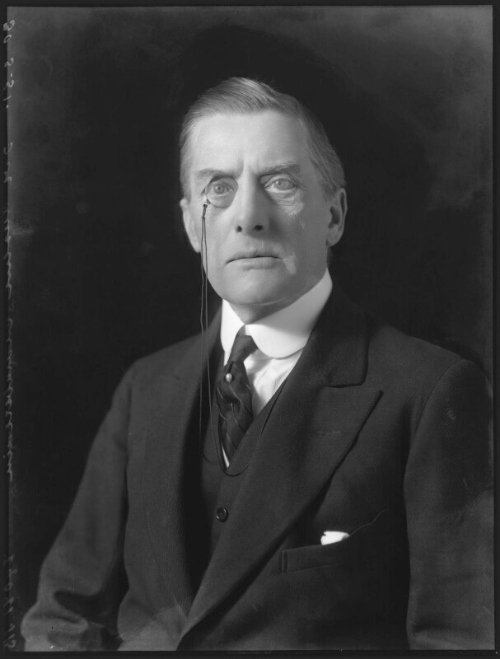
Austen Chamberlain was a distinguished British statesman who, like his celebrated father Joseph Chamberlain and his half-brother Neville Chamberlain, made a significant mark on national politics.
Born to politics in Edgbaston
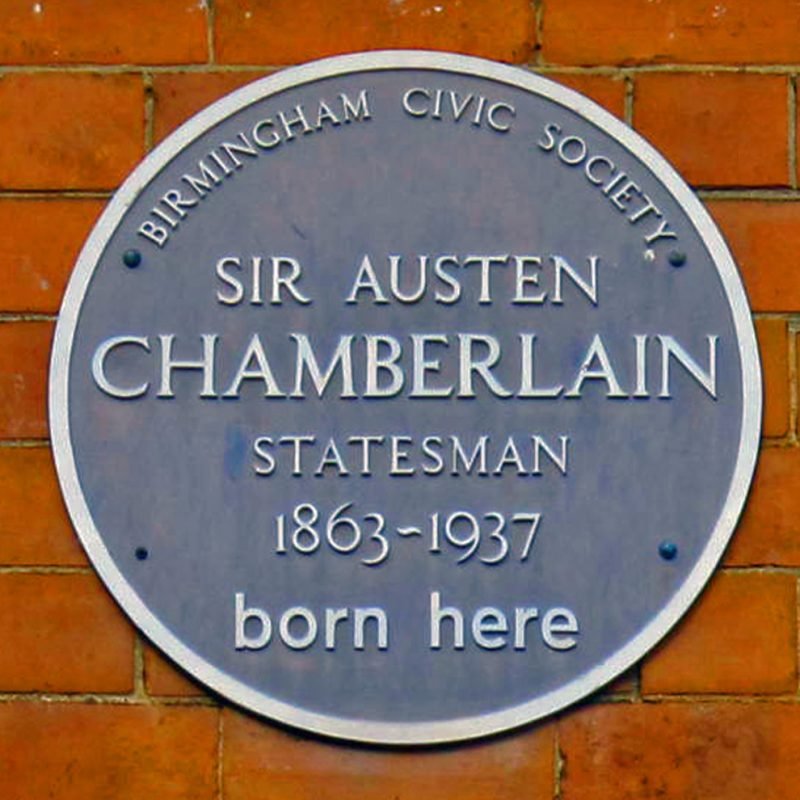
Born in Birmingham in 1863, at his father’s then-home, Southbourne, in Edgbaston, Austen was steeped in the political atmosphere of the city from an early age. He received a privileged education, attending Rugby School and then Trinity College, Cambridge, where he studied history. He furthered his studies in Paris and Berlin, gaining a broad understanding of European politics and economics. This international exposure would prove invaluable in his later diplomatic career.
Rising through the ranks
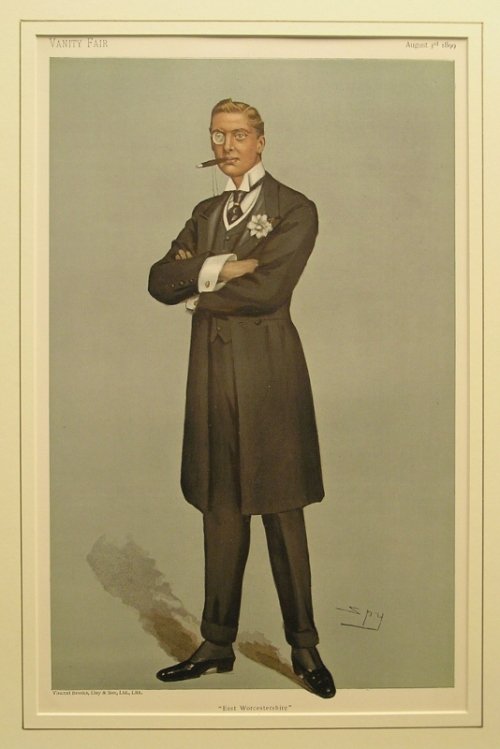
Austen Chamberlain entered Parliament in 1892, winning the East Worcestershire constituency. He quickly rose through the Conservative and Liberal Unionist ranks, holding various ministerial positions. His career spanned several significant roles, including Chancellor of the Exchequer twice (1903-1905 and 1919-1921), Leader of the Conservative Party (1921-1922), and, most notably, Foreign Secretary (1924-1929).
The peacemaker’s crown
As Foreign Secretary, Austen Chamberlain played a pivotal role in shaping European diplomacy after the First World War. He is best known for negotiating the Locarno Treaties in 1925, a series of agreements aimed at ensuring peace and stability in post-war Europe. For his efforts in securing these treaties, he was awarded the Nobel Peace Prize in 1925, sharing it with American statesman Charles G. Dawes. This achievement marked the pinnacle of his political career and showcased his skills as a diplomat.
A legacy of service
Knighted as a Knight of the Garter in 1925, Sir Austen Chamberlain continued to serve as a respected elder statesman, offering advice and insights on foreign affairs. He was known for his integrity, his considered approach to policy, and his commitment to international cooperation. Sir Austen Chamberlain died on 16th March 1937, just a few months before his half-brother Neville became Prime Minister. Austen Chamberlain’s significant contributions to British foreign policy and his dedication to public service ensured his own distinct and respected place in political history.