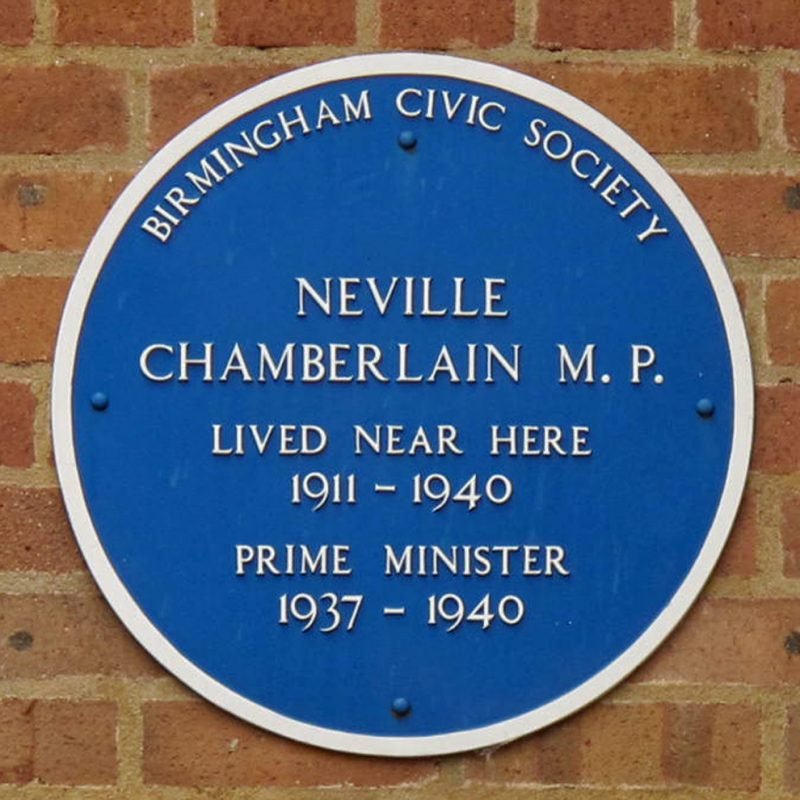
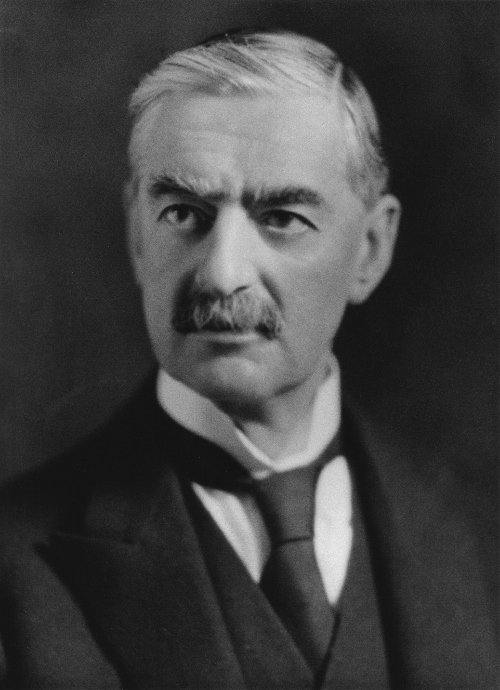
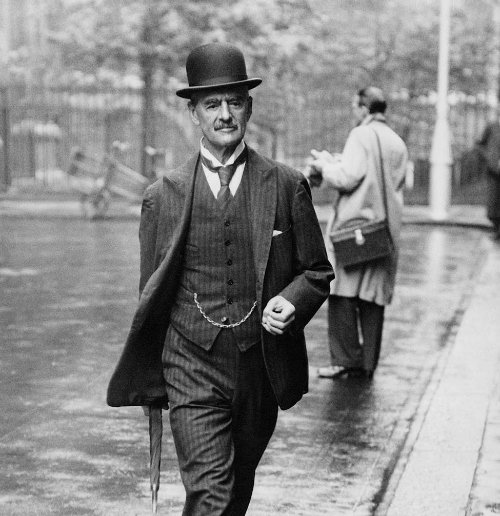
Neville Chamberlain was a British Conservative politician who served as Prime Minister from May 1937 to May 1940.
Birmingham’s political dynasty continues
Born in Birmingham in 1869, he was the son of the influential statesman Joseph Chamberlain and half-brother to former Foreign Secretary Sir Austen Chamberlain. His upbringing in Birmingham, a city his father profoundly shaped, instilled in him a strong sense of public service and a keen interest in municipal affairs.
Chamberlain was educated at Rugby School and Mason College (which later became the University of Birmingham). Unlike his father and half-brother, his early career was in business rather than politics. He spent several years managing a sisal plantation in the Bahamas for his father, an experience that, though ultimately unsuccessful financially, provided him with valuable administrative skills.
Birmingham’s reforming Lord Mayor
Upon returning to Birmingham, Chamberlain turned his attention to local politics. He was elected to Birmingham City Council in 1911 and became Lord Mayor of Birmingham in 1915, following in his father’s footsteps. During his time as Lord Mayor, he demonstrated a strong commitment to social reform, particularly in housing, and was instrumental in the creation of the Birmingham Municipal Bank.
From local hero to national leader
Chamberlain entered national politics relatively late in life, being elected as a Member of Parliament for Birmingham Ladywood in 1918 at the age of 49. He quickly rose through the ranks, serving as Postmaster General, Minister of Health (twice), and Chancellor of the Exchequer. As Minister of Health, he introduced significant reforms to the Poor Law and unemployment insurance.
The quest for peace
He became Prime Minister in 1937, inheriting a complex international situation dominated by the rise of aggressive totalitarian regimes in Germany and Italy. Chamberlain’s premiership is most famously, and controversially, associated with his policy of appeasement towards Nazi Germany. His efforts to avoid war, most notably through the Munich Agreement of 1938, which ceded the Sudetenland region of Czechoslovakia to Germany, were initially met with widespread relief. He famously declared “peace for our time” upon his return from Munich. However, Hitler’s continued aggression, culminating in the invasion of Poland in September 1939, forced Britain to declare war, marking the failure of appeasement. Chamberlain led the country for the first eight months of the Second World War. Criticism of his wartime leadership, particularly after the Norway Debate in May 1940, led to his resignation. He was succeeded by Winston Churchill.
Neville Chamberlain died of cancer on 9th November 1940, just six months after leaving office. His legacy remains a subject of historical debate, but his dedication to public service, his significant contributions to social reform, and his earnest desire for peace are undeniable.