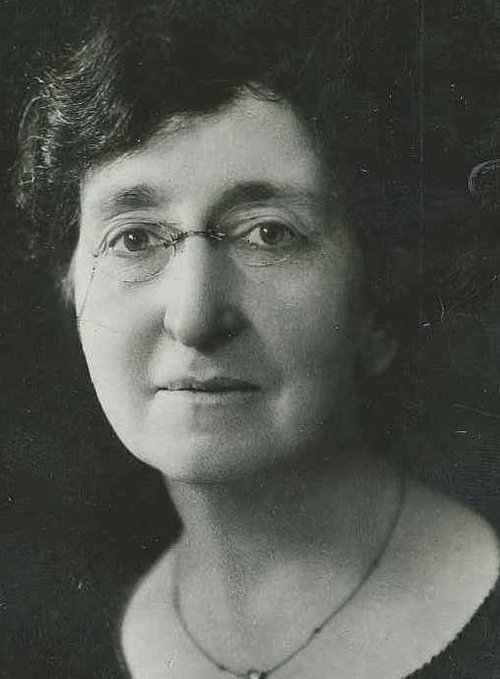
Mary Ellen Cottrell was a pioneering Labour and Co-operative activist and politician, whose long life was dedicated to social reform and advocating for working-class families in Birmingham and nationally.
From Yorkshire teacher to Birmingham trailblazer
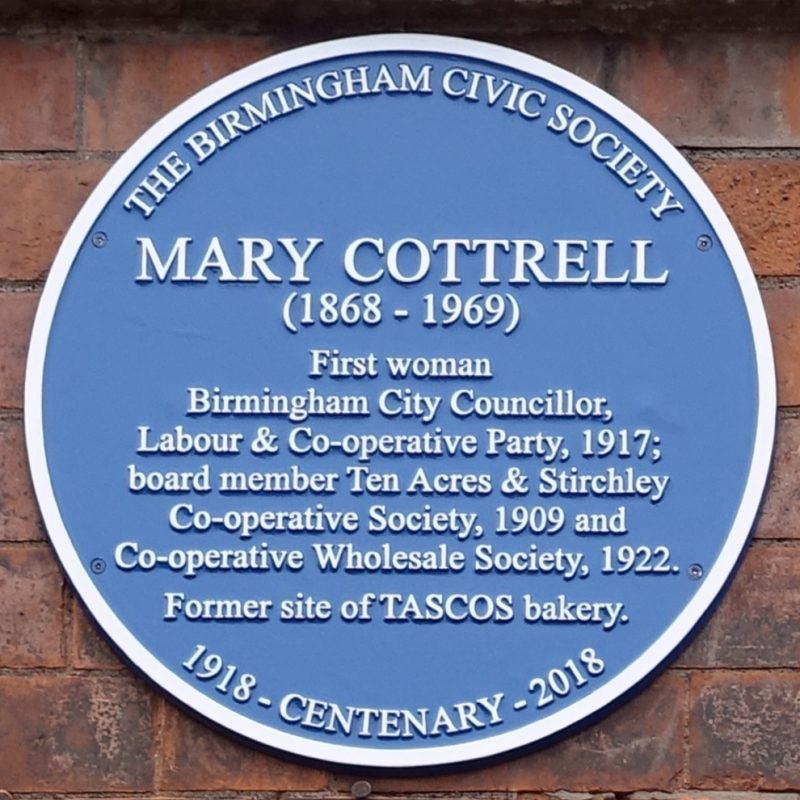
Born Mary Ellen Bryan in Sheffield, Yorkshire, in 1868, Mary Cottrell trained as a schoolteacher and eventually became a headmistress. In 1896, she married Frank Cottrell, a printer’s compositor from Birmingham, and they subsequently made their home in the city. Upon moving to Birmingham, Cottrell became deeply involved in the co-operative movement, a key pillar of social reform and mutual aid at the time. She quickly rose through the ranks of the Ten Acres and Stirchley Co-operative Society (TASCOS), becoming the first woman elected to its management board in 1909. Her dedication and eloquence also led her to become the first woman to represent the Midlands on the Co-operative Union’s Central Board in 1917. During the First World War, she played a crucial role on the Milk Advisory Board, where she is credited with successfully campaigning for increased milk rations for infants, children, and nursing mothers.
Breaking through the glass ceiling
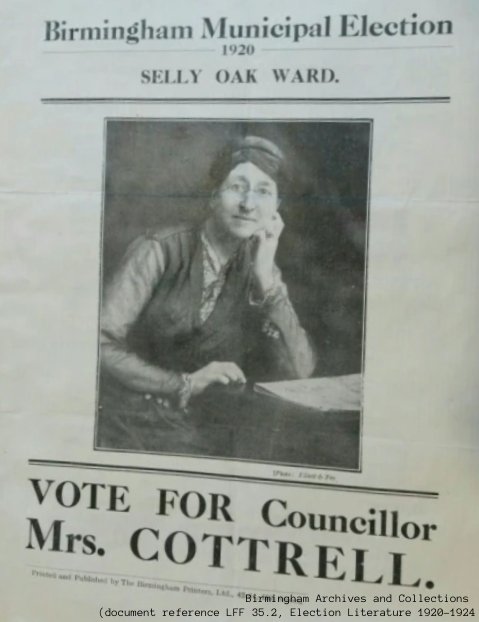
Following many other “firsts” for women, in February 1917, Mary Cottrell made history by becoming the first female Labour councillor elected to Birmingham City Council, representing the Selly Oak ward. Her election was significant, as it predated the official launch of the Co-operative Party, though she later stood as a Labour/Co-op candidate. As a councillor, she championed policies related to public health, maternity and infant welfare, housing, and education, advocating for free secondary education for all and better living conditions for the city’s residents. She was one of only two women councillors in Birmingham at the time and continued to press for greater female representation in local government.
A century of service
After a brief defeat in 1920, she returned to the Council in 1921 but resigned in 1922 to focus on her increasingly demanding national work. In a landmark achievement, she became the first woman elected as a director of the Co-operative Wholesale Society (CWS) in 1922, a position she held for an impressive 37 years, until her retirement in 1936. This role involved extensive travel, including to India, and she was a constant advocate for women’s involvement in co-operative management. Mary Ellen Cottrell remained active in her community and the co-operative movement well into her later years, demonstrating an unwavering commitment to her beliefs. She passed away in Birmingham in December 1969 at the remarkable age of 101, leaving behind a legacy of pioneering activism and dedicated public service.