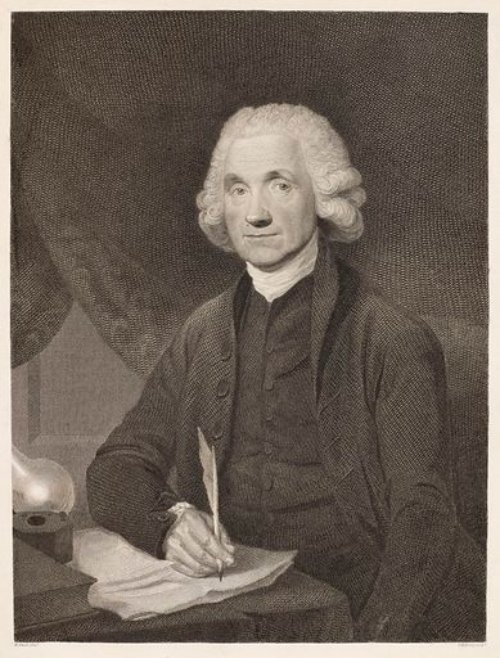
Joseph Priestley was an extraordinary polymath – a prominent English dissenting clergyman, natural philosopher, chemist, educator, and political theorist.
The genius who changed chemistry forever
Born in Birstall, Yorkshire, Priestley was educated at Daventry Academy, a dissenting academy where he developed a broad intellectual curiosity and a commitment to rational inquiry. Science was an important part of Priestley’s belief in ‘rational christianity’ and he argued that scientific progress and human perfectibility required freedom of speech, worship, and education. Priestley is credited with the independent discovery of oxygen in 1774 (though he called it “dephlogisticated air”), a discovery that revolutionised chemistry. He also isolated and characterised numerous other gases, including ammonia, hydrogen chloride, and nitric oxide, and invented soda water.
The Lunar Society years
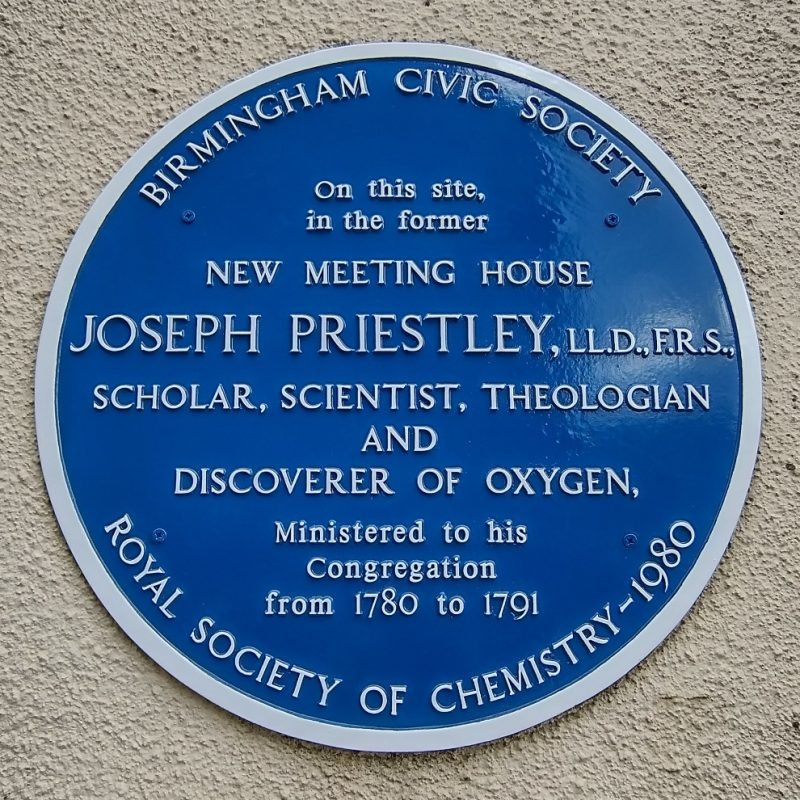
Priestley arrived in Birmingham in 1780, drawn by an invitation to serve as minister to the New Meeting House and by the city’s vibrant intellectual atmosphere. Here, he became a central figure in the Lunar Society of Birmingham, a renowned informal group of leading industrialists, scientists, and thinkers who met monthly to discuss the latest advancements in science, technology, and philosophy. Beyond his scientific endeavours, Priestley was a philosopher, theologian and educationalist and a campaigner for political liberty, religious toleration and anti-slavery. He was a champion of the French Revolution and argued passionately for civil liberties, educational reform, and religious toleration.
Tragic end to living in Birmingham
These radical views, however, made him unpopular with the conservative establishment. In 1791, during the infamous “Priestley Riots” – a backlash against dissenters and reformists – his home, laboratory, and meeting house in Birmingham were destroyed by a mob. Following the riots, Priestley was forced to leave Birmingham and, in 1794, emigrated to the United States, settling in Northumberland, Pennsylvania, where he continued his scientific and theological work until his death in 1804.