Giving Birmingham the space, confidence and platform to tell its own story — past, present and future.
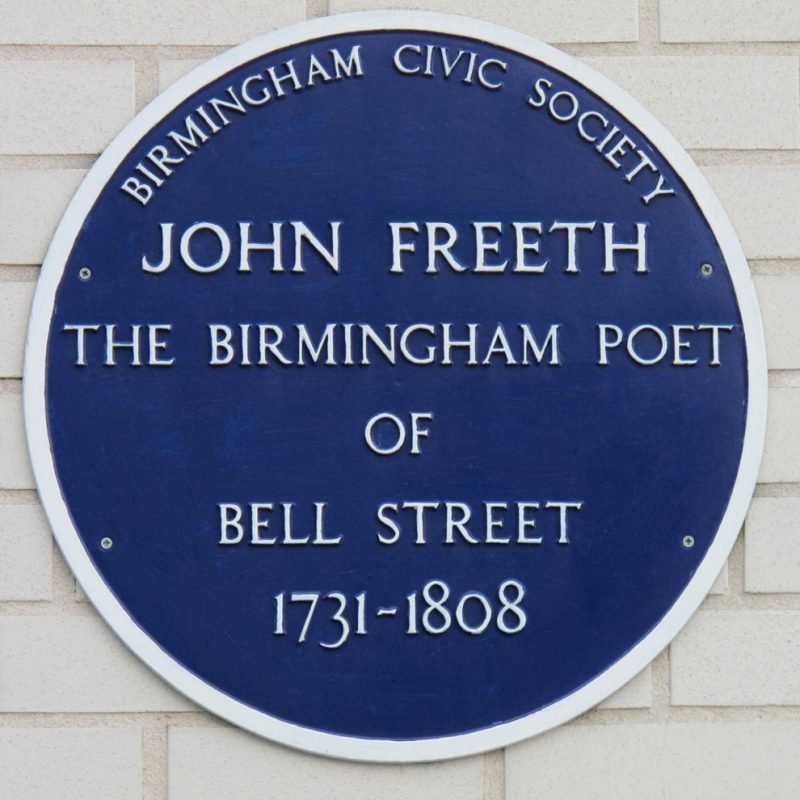
Blue Plaque: John Freeth
John Freeth (c1731 - 19/09/1808)
Birmingham's musical news reporter
Blue Plaque Awarded: date unknown Address: The Bullring Shopping Centre, East Mall, B5 4BU
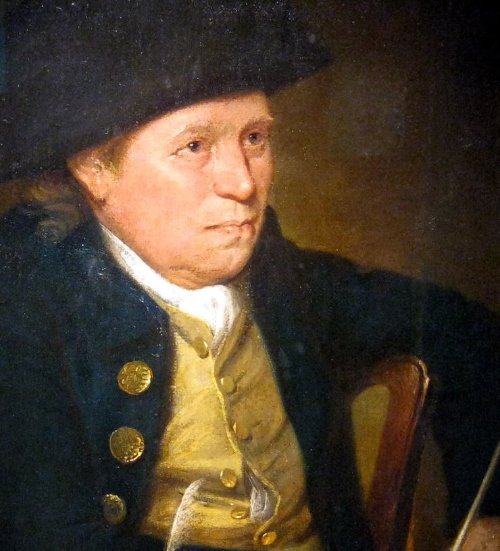
Often known as “Poet Freeth,” John Freeth was a charismatic innkeeper, poet, and songwriter who played a significant role in the political and cultural life of 18th-century Birmingham.
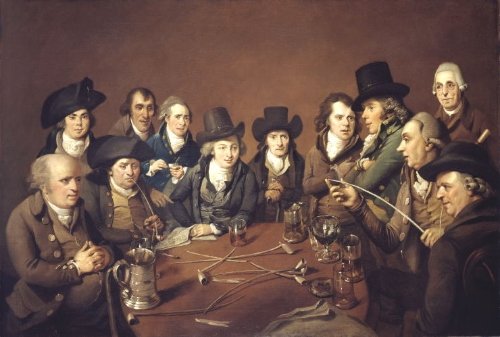
More than just coffee Born in Birmingham around 1731, John Freeth was the son of Charles and Mary Freeth, who owned the Leicester Arms tavern and coffee house on Bell Street. When his parents died, Freeth took over the management of the family establishment, which subsequently became known as “Freeth’s Coffee House.” Coffee houses in this period were important centres for intellectual and political discourse, and Freeth’s establishment became a popular meeting place for locals and visitors alike. It was particularly frequented by some of Birmingham’s most prominent political groups, including the Birmingham Book Club. The spread of knowledge through the discussion of ideas was a fundamental characteristic of Freeth’s establishment.
The original protest singer What made Freeth’s Coffee House truly distinctive was John himself. He was a prolific lyricist and would regularly compose songs and ballads about the news of the day – covering local affairs, national politics, and even international events. He would then perform these songs for his patrons, often setting his words to popular tunes of the time. His sharp wit and topical observations made him a beloved figure, and his coffee house became renowned for its lively discussions and entertainment. He began publishing his songs in short books – ‘The Political Songster’ and ‘A Touch of the Times’’.
The people’s poet Freeth’s political sympathies leaned towards liberal and radical views, and he often expressed these in his songs. He was a supporter of the Whig party and became increasingly sympathetic to the American colonists during their dispute with the British government. He even celebrated the release and election of the radical journalist John Wilkes. Many coffee houses became venues for formal and informal groups and societies with shared political leanings to meet. Groups with strong radical and progressive leanings, often sympathetic to the ideals of the French Revolution and figures like the Jacobins, met at Freeth’s Coffee House.
John Freeth was married to Sarah, and they had at least nine children. He was buried near the Old Meeting House in Birmingham, though his remains were later re-interred at Whitton Cemetery in 1882. Upon his death in 1808 at around 77 years of age, Aris’s Birmingham Gazette described him as “of this town, commonly called the Poet Freeth, a facetious bard of nature.”
Image Gallery
More Information
For further information about John Freeth, please see selective links below.