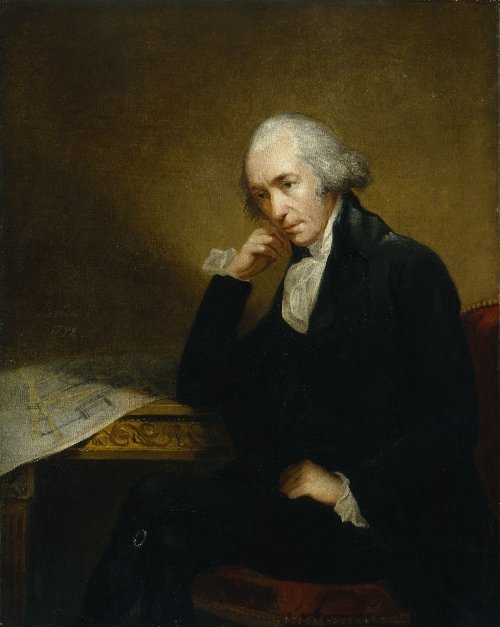
James Watt was a Scottish inventor and mechanical engineer whose improvements to the Newcomen steam engine were fundamental to the changes brought by the Industrial Revolution, profoundly impacting Britain and the world.
The genius behind the steam revolution
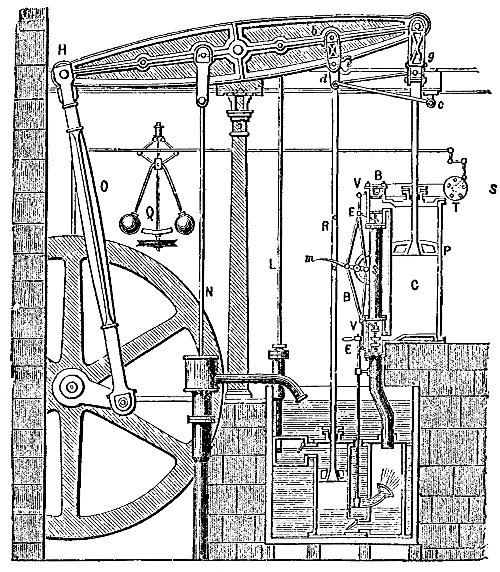
Born in Greenock, Scotland, Watt’s most transformative work, and the period that cemented his global legacy, occurred during his long and productive residency in Birmingham. Watt initially worked as an instrument maker. His interest in steam engines began in 1764 when he was tasked with repairing a Newcomen atmospheric engine. His crucial innovation, patented in 1769, was the separate condenser, which dramatically improved the steam engine’s efficiency by preventing the main cylinder from cooling down with each stroke. This single improvement vastly reduced fuel consumption and made steam power a far more practical and economical source of energy.
The Birmingham partnership that changed history
The commercialisation of his invention, however, required significant capital and manufacturing expertise. In 1774, Watt moved to Birmingham to enter a partnership with the charismatic Birmingham industrialist Matthew Boulton. Boulton, based at his Soho Manufactory in Handsworth, provided the necessary financial backing, skilled workforce, and manufacturing capabilities to bring Watt’s engine to widespread use. The firm of Boulton & Watt became world-renowned, producing steam engines for mines, factories, and mills across Britain and beyond.
Continuous innovation in Birmingham
During his time in Birmingham, Watt continued to refine his engine, developing the rotary motion which enabled its use to power machinery in factories, not just pumps. He also invented the centrifugal governor, a crucial device for automatically regulating engine speed, and coined the term “horsepower.” Watt was an accomplished chemist and is jointly responsible for proving that water is a compound and not an element and in 1780 he invented the first reliable document copying machine. Watt was a prominent member of the Lunar Society of Birmingham, a convivial group of leading industrialists, scientists, and thinkers who met regularly to discuss advancements, further cementing his place at the heart of 18th-century innovation.
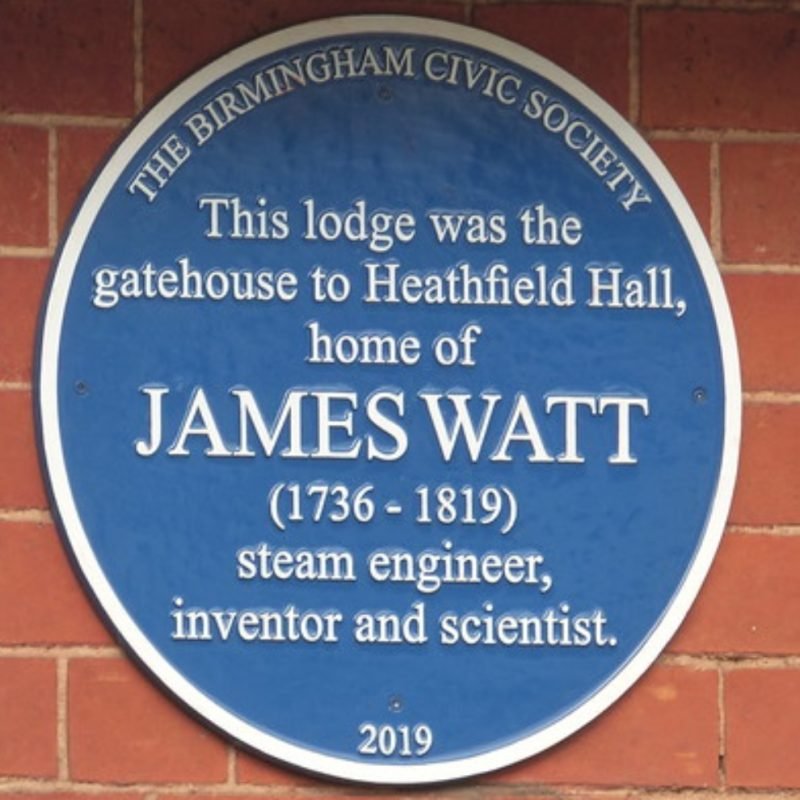
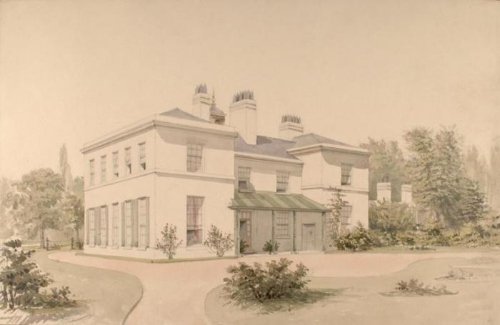
James Watt retired from the Boulton & Watt company in 1800, leaving his sons to continue the business. He died at his home, Heathfield Hall, in Handsworth, Birmingham, in 1819.