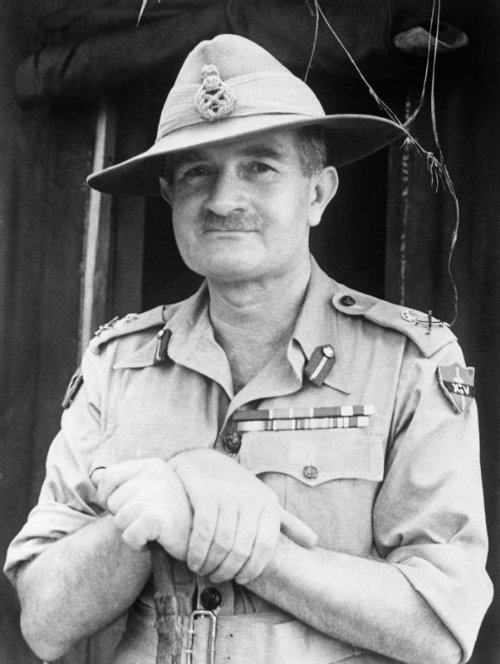
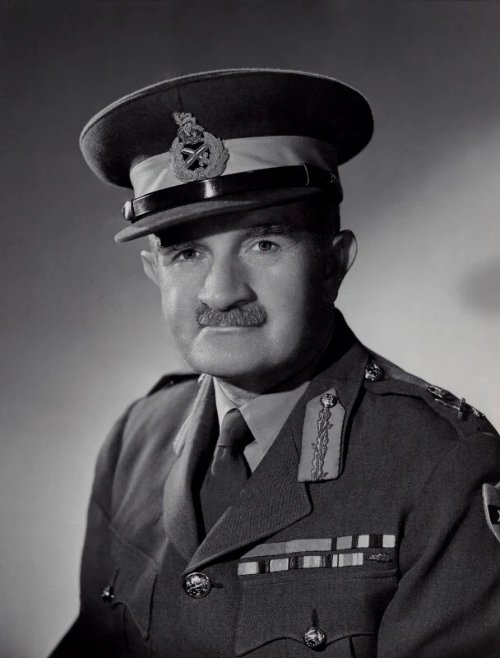
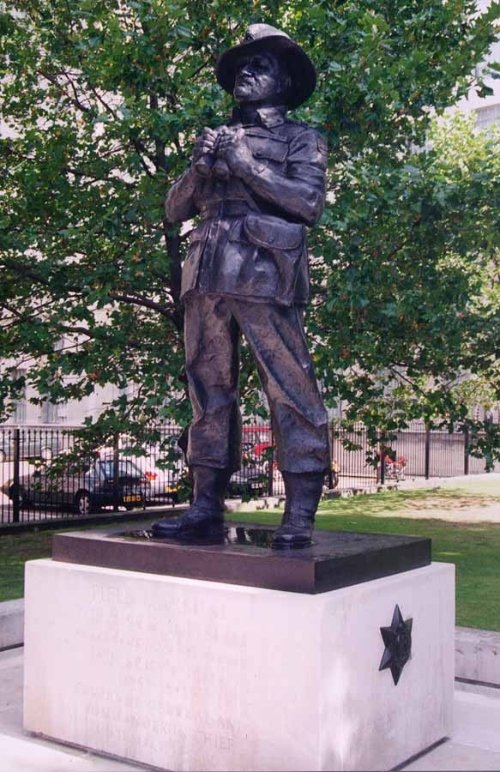
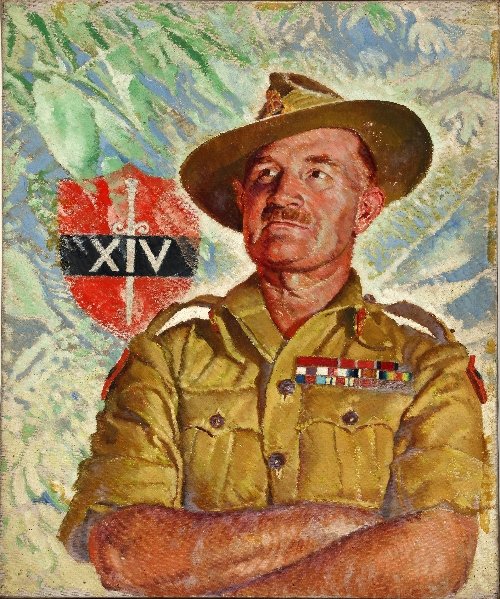
Field Marshall William Slim was one of Britain’s most respected military commanders, whose leadership and strategic brilliance were instrumental in the Allied victory in Burma during the Second World War.
Early Birmingham years
Though born in Bristol, Slim’s early life and character were partly shaped by his family’s move to Birmingham, where he attended the city’s King Edward’s School. After leaving school, his father’s business failure meant that the family could only afford to send his elder brother to university; William taught in a primary school and worked as a clerk in a metal-tube manufacturing business.
From defeat to victory
Slim’s military career began with the outbreak of the First World War, where he served with distinction in Gallipoli and Mesopotamia, sustaining serious wounds. Between the wars, he continued to serve in the Indian Army, gaining invaluable experience in various staff and command roles, particularly in the challenging terrain of the North-West Frontier.
It was during the Second World War that Slim achieved widespread recognition, his most significant role came with the command of the Fourteenth Army in the Burma Campaign from 1943. Facing a formidable Japanese enemy in incredibly difficult jungle conditions, Slim transformed a demoralised and defeated force into a highly effective fighting machine. He prioritised the welfare of his troops, ensuring they were well-supplied and medically supported, and fostered a strong esprit de corps. His strategic genius led to the decisive defeat of the Japanese in Burma, a victory often overshadowed by the European theatre but nonetheless a monumental achievement.
Beyond the battlefield
After the war, Slim continued to serve his country, notably as Chief of the Imperial General Staff from 1948 to 1952, and then as Governor-General of Australia from 1953 to 1959. He was elevated to the peerage as Viscount Slim of Yarralumla and of Bishopston.
Field Marshal Slim was admired for his modesty, his practical leadership, and his deep care for his troops. He published his acclaimed memoirs, Defeat into Victory, a compelling account of the Burma Campaign. William Slim passed away in London in 1970, leaving behind a legacy as one of Britain’s most effective military leaders.