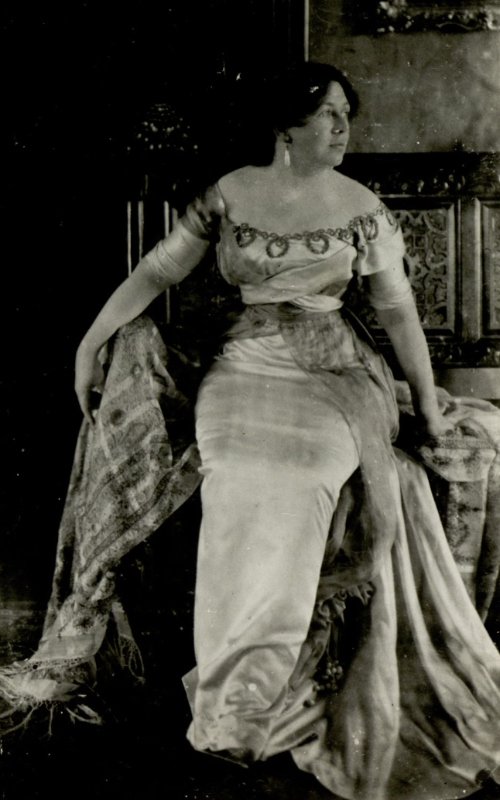
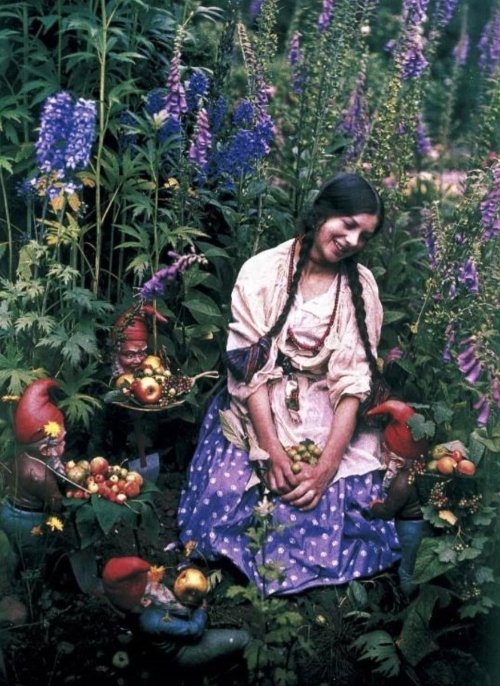
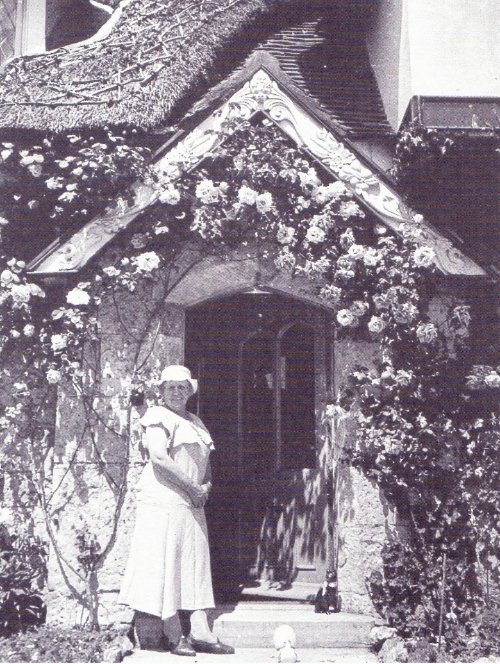
Emma Barton was a pioneering photographer, particularly known for her artistic and unconventional approach to portraiture and her significant contributions to the Pictorialist movement.
From Birmingham streets to international fame
Born Emma Boaz Rayson in Birmingham in 1872, the eldest of six children, Emma left school at age 12 to work as a clerk. She married George Kingston Barton, a commercial traveller, in 1895. Emma’s photographic career began in earnest around the turn of the 20th century.
Breaking Victorian boundaries
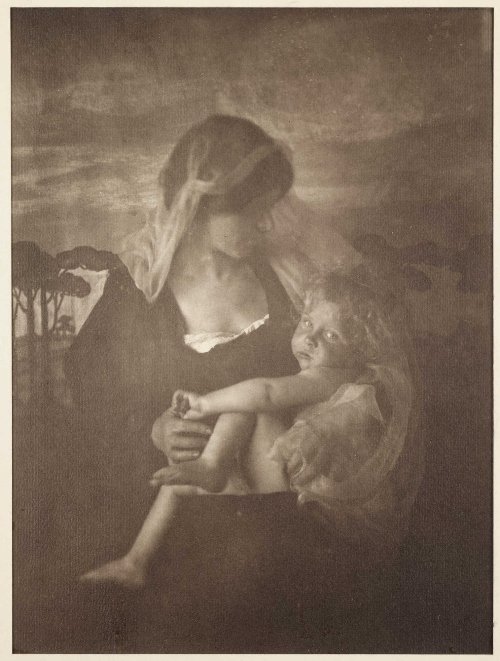
Barton quickly gained recognition for her distinctive style, moving away from the rigid, formal portraits of the Victorian era. Instead, she favoured soft focus, evocative lighting, and naturalistic poses, often depicting mothers and children, and using her own family members as models. Her work frequently conveyed a sense of intimacy and emotion, blurring the lines between photography and fine art.
Global recognition from a home studio
Barton’s talent was recognised internationally. Her photographs were exhibited widely, including at the Royal Photographic Society, the Paris Salon, and the Vienna Secession. She was a prolific exhibitor and received numerous awards and medals for her work, which was published in prominent photographic journals of the time. She became an Associate of the Royal Photographic Society in 1901 and a Fellow in 1904. Her artistic vision placed her firmly within the Pictorialist movement, which sought to elevate photography to the status of art by emphasising aesthetic beauty over mere documentation. Despite her professional success and international acclaim, Emma Barton operated from a home studio, initially in Birmingham and later in Ludlow, Shropshire, where she moved with her family around 1905. She was a working mother, often balancing her artistic pursuits with raising her six children. This domestic context, combined with her innovative techniques, makes her a particularly fascinating figure in the history of photography.
Birmingham’s artistic legacy
Emma Barton died in Ludlow; although she moved away from her birthplace, her early life in Birmingham undoubtedly shaped her perspective, and her legacy as an early female photographic artist of international standing is now increasingly celebrated. Her work can be found in major photographic collections worldwide, attesting to her enduring impact on the art of photography.