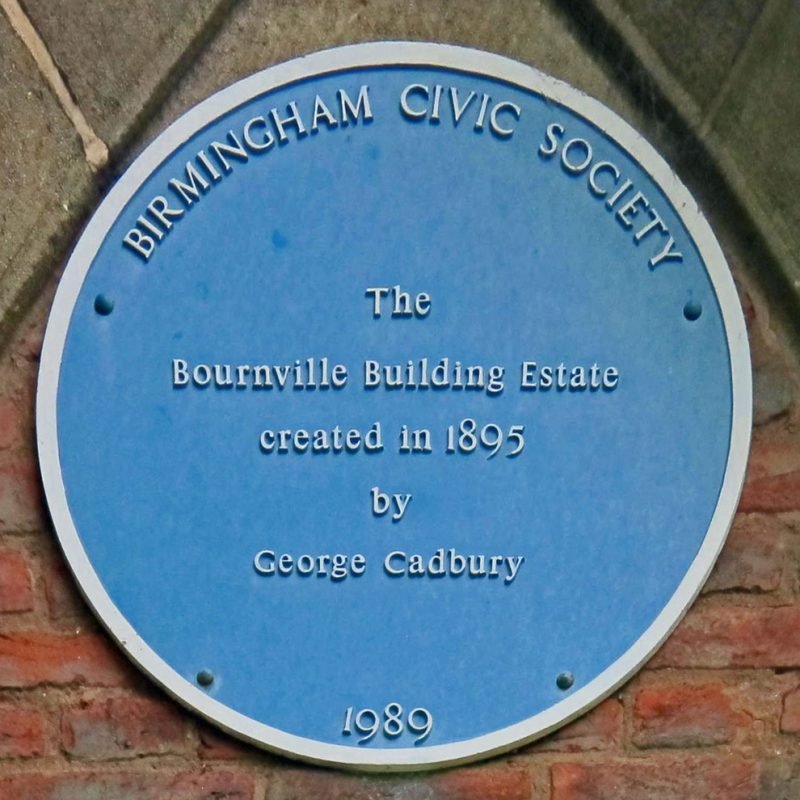
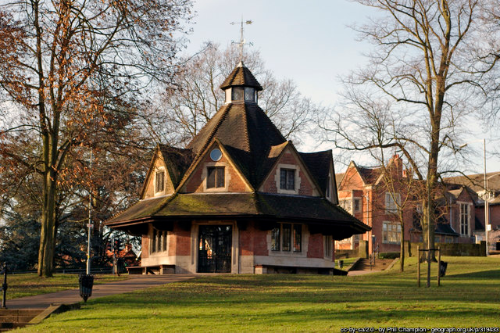
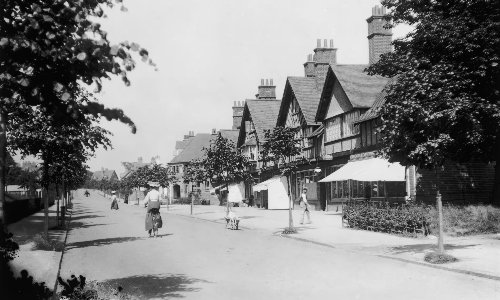
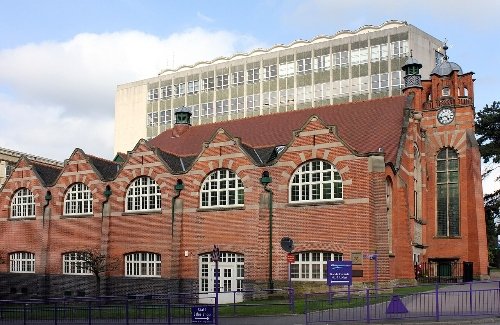
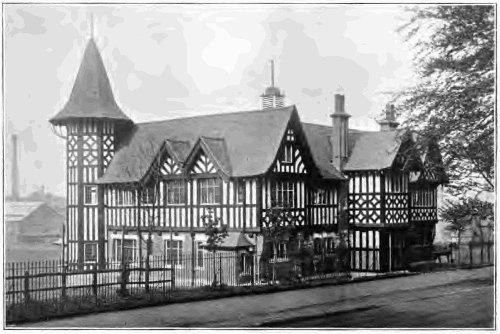
The Bournville Estate represents a groundbreaking vision for social housing and community planning, originating from the philanthropic spirit of the Cadbury family.
The visionary behind the dream
George Cadbury (1839-1922), a prominent Quaker and one of the owners of Cadbury Brothers chocolate company was appalled by the squalid living conditions of the working class in central Birmingham during the late 19th century and he envisioned a better environment for his employees and indeed for all working people. In 1878 George and his brother Richard made the revolutionary decision to move their business out of the city centre to a rural location just four miles south of Birmingham – they named this new location “Bournville” by adding “ville” to the name of the “Bourn” stream.
Building the model village
The new Cadbury factory opened in 1879, and alongside it, 16 cottages were initially built for key workers. In 1893, they purchased an additional 120 acres of land near the factory with the express purpose of creating a “model village” that would “alleviate the evils of modern, more cramped living conditions”.
Revolutionary design principles
A key principle of Bournville’s development was the integration of nature and healthy living. Each house was designed to occupy no more than a quarter of its plot and featured generous gardens, often with fruit trees, encouraging residents to grow their own food. The roads were tree-lined, and the layout incorporated numerous parks, recreation grounds, and sports facilities, including football pitches, bowling greens, and even an outdoor swimming lido. The Cadbury’s appointed young architect, William Alexander Harvey, to manage the design and development of the village.
Securing the future
To safeguard his radical social experiment for the long term, George Cadbury established the Bournville Village Trust in 1900. He gifted the land and nearly 400 houses to this independent charitable body, with the crucial stipulation that all revenue generated from the estate should be reinvested into its upkeep, expansion, and the promotion of housing reform elsewhere. This ensured that Bournville would remain a high-quality, affordable community, protected from speculative development. The Trust oversaw the continued development of the village, ensuring that new constructions adhered to the principles of good design and ample space. The resident architect, William Alexander Harvey (1874-1951), played a pivotal role in shaping Bournville’s distinctive Arts and Crafts-influenced architecture, which became a blueprint for other garden suburbs across the country.
Bournville quickly evolved into a thriving community with its own shops, schools, places of worship, and community halls. George Cadbury’s belief that improved living conditions would lead to enhanced public health proved accurate, and Bournville became internationally recognised as a pioneering example of town planning and social welfare.