Arthur Stansfeld Dixon was a prominent English architect, metalworker, and key figure in the Arts and Crafts movement in Birmingham.
Following in famous footsteps
Born in Edgbaston, he was the eldest son of the influential education reformer and Member of Parliament, George Dixon. This upbringing in a family dedicated to civic and social improvement likely fostered his own commitment to applying art and design to everyday life.
Dixon received his education at University College, Oxford, and further honed his artistic skills at the Birmingham School of Art. While he commenced independent architectural practice in Birmingham in 1896, his talents extended beyond building design to include metalwork and painting.
The Guild that changed everything
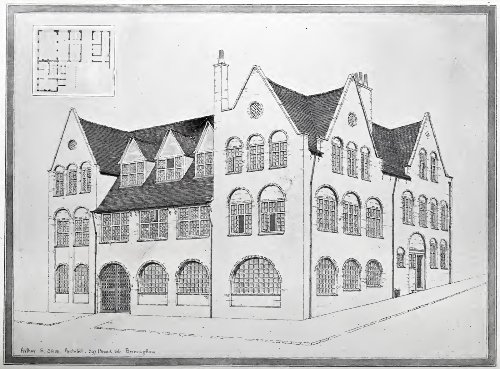
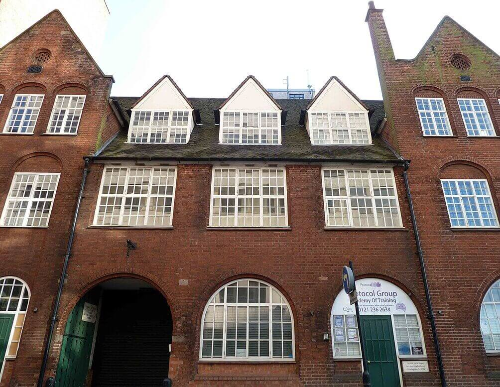
In 1890, Dixon played a pivotal role in founding the Birmingham Guild of Handicraft. This organisation was inspired by the ideals of the Arts and Crafts movement, emphasising the importance of skilled craftsmanship, the beauty of natural materials, and a rejection of industrial mass production. Dixon became the managing director of the Guild and was the primary designer of its metal products, which formed a significant part of its output. The Guild’s purpose-built headquarters in Great Charles Street, Birmingham, designed by Dixon himself, showcased his architectural vision.
Building Birmingham’s character
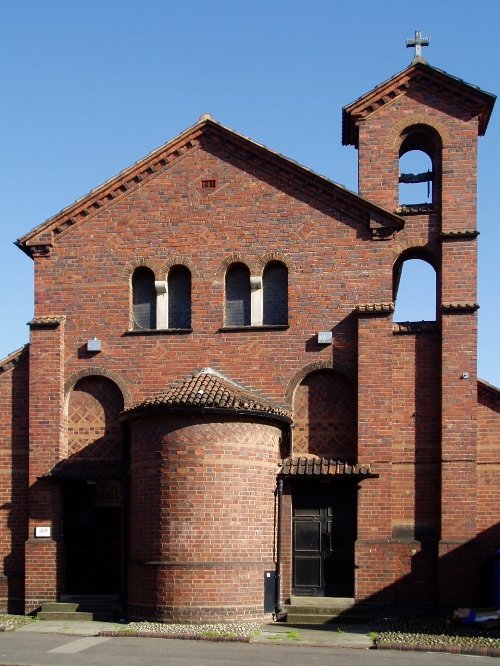
His architectural work in Birmingham includes the design of the distinctive Romanesque-style Church of St John & St Basil in Deritend (1910-1911), which has been described as a prime example of his “Arts and Crafts primitivism.” He also designed St Andrew’s Church in Barnt Green. His reputation extended internationally, as evidenced by his commission in 1917 to design the Anglican Cathedral in Seoul, Korea, though construction was not completed until much later.
The artist-architect’s legacy
Dixon was a member of the Arts & Crafts Exhibition Society, participating in their exhibitions from 1893 to 1916, and was elected a member of the Art Workers Guild in 1906. He became a Fellow of the Royal Institute of British Architects (FRIBA) in 1907.
Arthur Stansfeld Dixon died in Woodstock, Oxfordshire, on 8th January 1929, and was buried in Surrey. His contributions as an architect and a driving force behind the Birmingham Guild of Handicraft left an enduring legacy on the city’s built environment and its strong connection to the Arts and Crafts movement.