Giving Birmingham the space, confidence and platform to tell its own story — past, present and future.
Our History
About Us
The Birmingham Civic Society is a charitable, member-led organisation that has been working to make Birmingham a better place for everyone since 1918. Post-WWI regeneration was the initial focus and we secured land to create the city’s open green spaces and improved existing parks. Over the years we have campaigned to save some of the city’s best-loved assets including The Rep Theatre and Burne-Jones stained glass windows. In the 1950s we erected our first blue plaque and since the early 2000s have promoted public art and active citizenship. We also consult on plans for new development in the city and support communities who are concerned about proposals. In 2018, we proudly celebrated our centenary year.
Today, our work now cuts across five areas, drawing on our legacy and contemporary expertise. As a membership organisation, citizens of Birmingham (and beyond!) who choose to become members and join our committees as volunteers enable us to do what we do – and play a key role in setting our agenda.
3600
Students taken part in our Next Generation Awards
100
Blue Plaques erected
100000
Trees planted in and around the Birmingham area
When we started
At the inaugural meeting on 10 June 1918, Birmingham Civic Society’s first President, Robert Windsor-Clive, the Earl of Plymouth, stated that the intention of the society was to:
“Bring public interest to bear upon all proposals put forward by public bodies and private owners for building, upon the laying out of open spaces and parks, and generally upon all matters concerned with the outward amenities of the city and district. It will insist that taste is a thing that matters, and if any offence against taste is challenged at the outset, great good will be done and converting of mean and unlovely parts of the City will follow.”
Society initiatives from 1919 included a meeting with the Town Planning Committee advocating for comprehensive urban planning, resulting in redevelopment plans for Northfield village, Pebble Mill Road, and the entrance to Cannon Hill Park. Additionally, the Society published a popular pamphlet proposing the public use of the Lickey Hills, later expanding to Sutton Park.
The society also submitted designs for street furniture and telephone boxes, with their street lamp designs adopted in 1937 and participation in a national telephone box design competition.
In its early years, guided by Honorary Secretary William Haywood, the Civic Society spearheaded efforts using initial donations to acquire land for open spaces.
Notably, they bought 10 acres in Northfield, establishing Daffodil Park (the area running alongside the River Rea and National Cycle Route 5, off Tessall Lane) in February 1920, later gifting it to the City Corporation with a condition for consultation on future developments.
Following this model, the Society acquired 25.5 acres in Kings Norton in October 1920, leading to the creation of Muntz Park in Selly Oak, Henburys near Highbury Park, Aston Hall Park, and Handsworth Park.
During the 1920s era, Haywood began to expand the work of the Society, forming the Gardens Guild to promote better gardening cultivation and creating campaigns to save Stratford House and the Aston Almshouses from demolition.
In 1923, the Society also led a successful campaign to keep the Repertory Theatre open, proposing a programme of productions and setting up a committee designed to boost audiences. This connection continues today, with a representative of the Society as a theatre trustee.
World War II and after
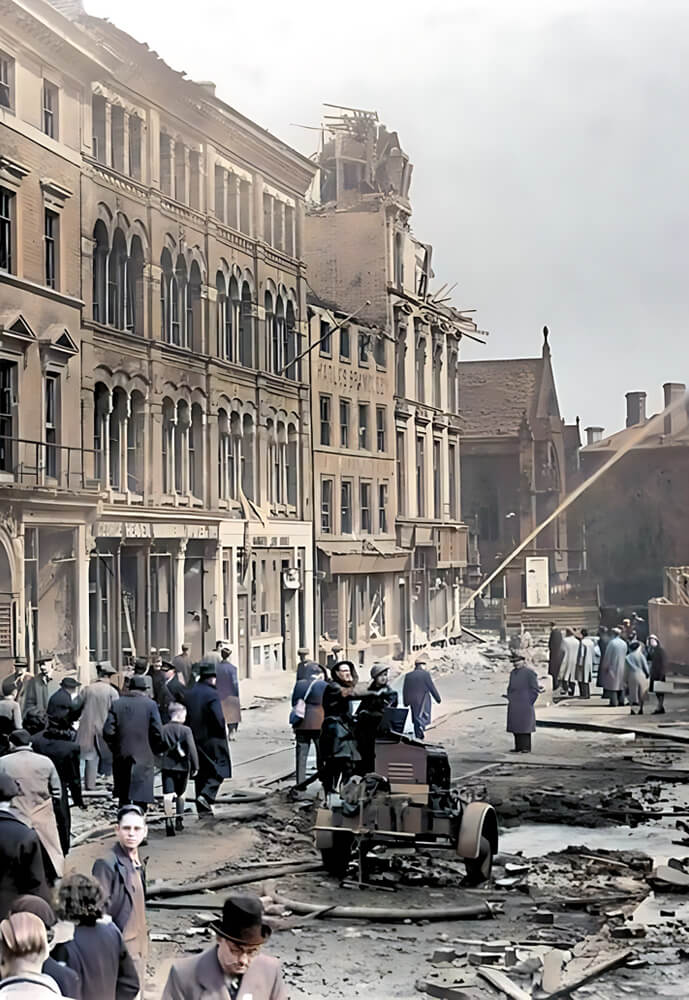
At the outbreak of the Second World War, the Society recognised Birmingham was likely to be a target for bombing and took action to protect its heritage, amongst other things the Burne-Jones designed windows in the Cathedral.
In 1953 the Society erected the first of its blue plaques, which honour those who have put Birmingham on the map.
In response to the Council’s demolition of many old buildings to pave the way for post-WWII redevelopment, the Society noted in its annual report of 1956 that:
“The swift pace of post-war development in Birmingham coupled with the acute shortage of undeveloped land is leading to the clearance and rebuilding of old sites. In this process a number of interesting buildings are being removed.”
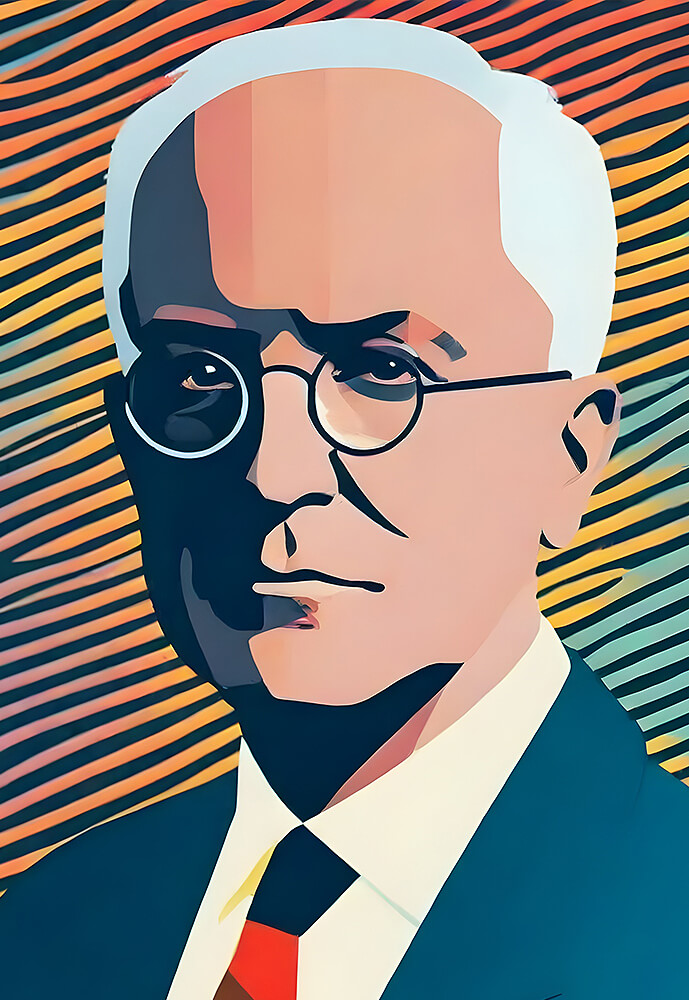
Less than a decade later, the Society awarded Sir Herbert Manzoni, City Engineer and Surveyor of Birmingham, with the Gold Medal for his contribution to the city’s development.
Subsequent decades saw less intense activity, though the Society continued to lobby for better planning and facilities for residents, sponsored post-graduate work and ran events for its members. In particular, the Society secured the reinstatement of the pools around the Chamberlain Fountain in Victoria Square.
1990s onwards
The Society was rejuvenated in the 1990s and the work of the Society evolved, formally establishing programmes of work that had been ongoing for many decades and introducing citizenship and its Next Generation Awards as well as a tree-planting programme, Birmingham Trees for Life.