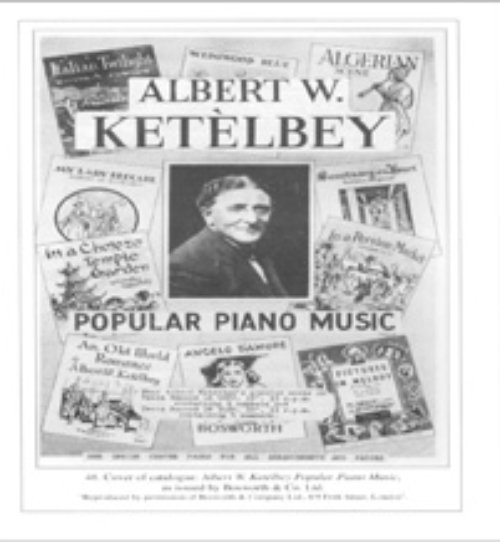
Albert Ketèlbey was a remarkably popular and prolific English composer, conductor, and pianist, whose evocative light orchestral music captured the imagination of millions worldwide.
Child prodigy from Alma Street
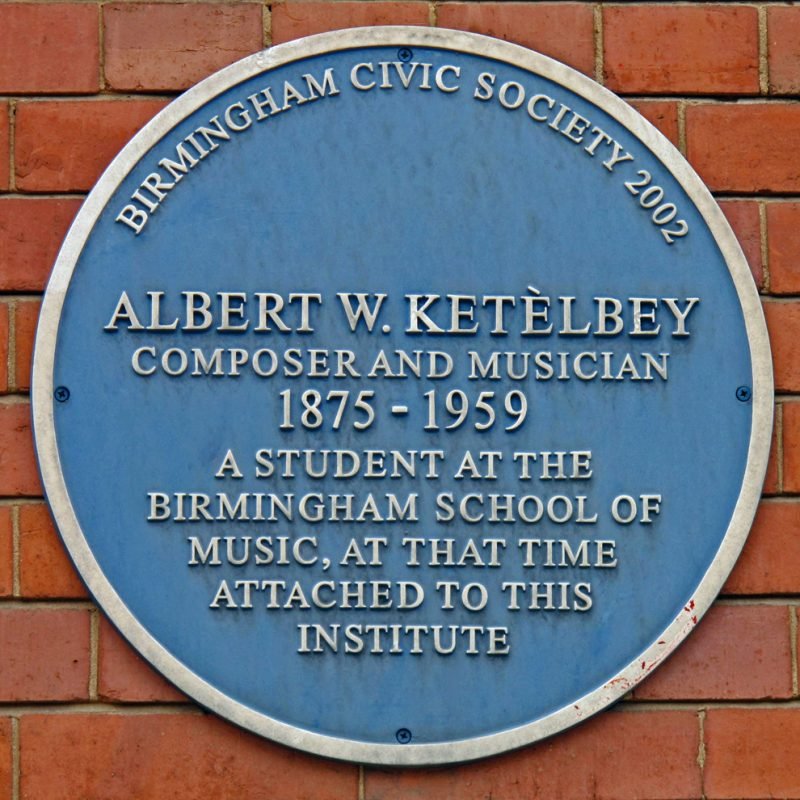
Albert Ketèlbey was born at 46 Alma Street, Aston and displayed prodigious musical talent from a very young age. He was a chorister at his local church, St Silas’ Lozells and, by the age of eleven, had composed a piano sonata that impressed none other than Edward Elgar. He studied at the newly established School of Music at the Birmingham and Midland Institute and secured a scholarship to Trinity College of Music in London at just 13, where he excelled in piano, organ, composition, and clarinet. He graduated in 1891 and began his career as a church organist, a concert pianist, and a music master at the College.
The master of musical moods
For a period, Ketèlbey toured as an accompanist and also worked as a musical director for theatre companies. However, it was his growing interest in light orchestral music and “mood music” for silent films that truly launched his distinctive style. He joined the Columbia Graphophone Company in 1907 and worked his way up to musical director, where he gained invaluable experience in orchestration and popular appeal. He composed prolifically under various pseudonyms, including Antoine L’Estaminet, André de Basque, and Denis Willoughby, often tailoring pieces for specific film scenes.
Popular success beyond imagination
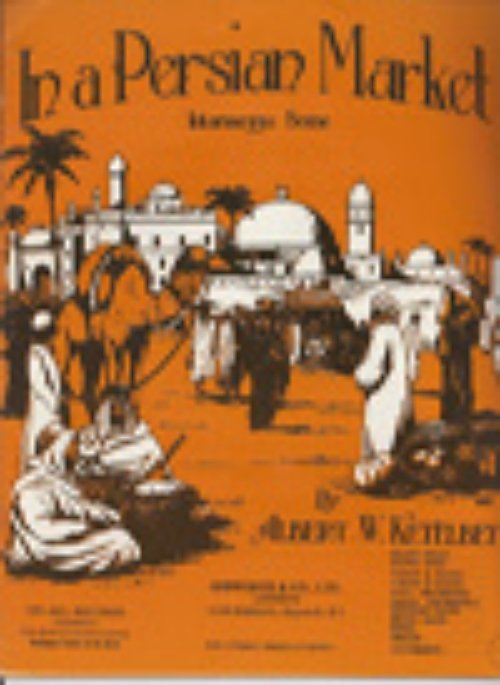
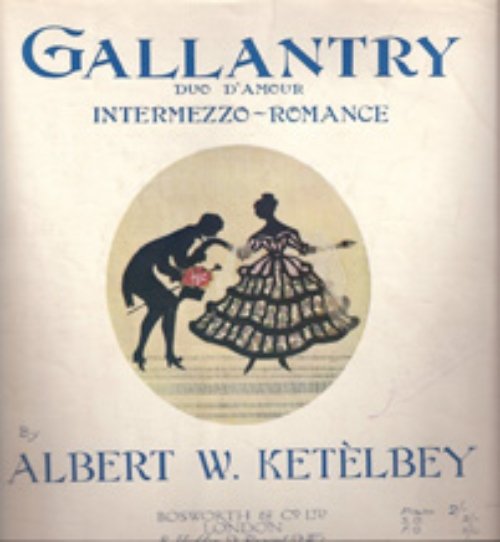
Ketèlbey’s most famous compositions are renowned for their picturesque and often exotic themes, transporting listeners to far-off lands through their vivid musical imagery. These pieces, often published as sheet music and recorded on early gramophones, sold millions of copies, making Ketèlbey a very wealthy man. His popularity in the 1920s and 30s was immense, with his works regularly performed on radio and in concert halls. He conducted many of his own compositions and was a pioneer in recording them. He would tour British seaside resorts annually to give special concerts where he played the piano in his own orchestral compositions, but as tastes changed after the Second World War these tours ceased to be held.
Despite his fame, Ketèlbey remained a relatively private individual. He died in 1959 in Cowes, Isle of Wight, where he had lived for many years. His music, though sometimes dismissed as “light” or “sentimental” by critics, undeniably brought immense pleasure to a vast audience and remains a charming and enduring part of the British musical heritage.