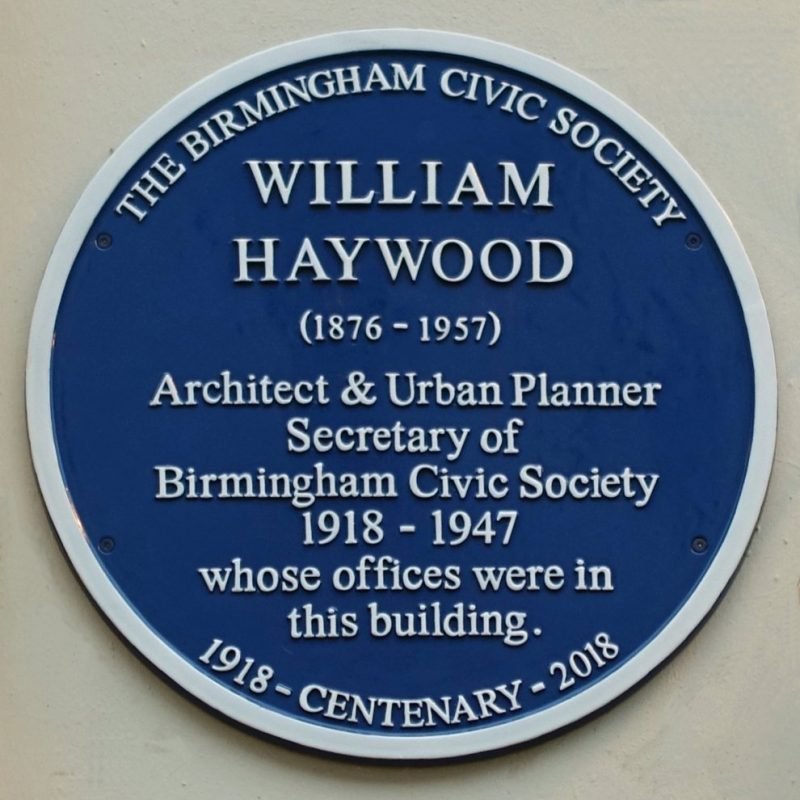
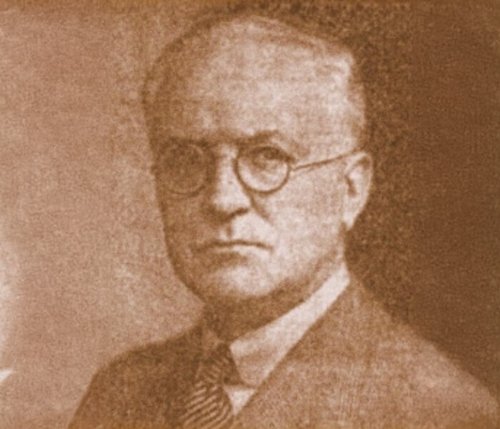
William Haywood was a distinguished English architect, urban planner, and a central figure in shaping the civic and built environment of Birmingham during the first half of the 20th century.
Rising talent and academic excellence
Born in Ladywood in 1876, William Haywood was the son of a local silversmith. Haywood’s artistic and architectural talents were evident from a young age. He received his training at the Birmingham School of Art, where he excelled, winning the Maintenance Scholarship in 1894, the prestigious Pugin Studentship in 1897, and the RIBA Silver Medal. After working as an assistant, he established his own independent architectural practice in Birmingham in 1900. In 1914, he formed a significant partnership with Herbert Tudor Buckland, creating the firm Buckland & Haywood (later Buckland & Haywood-Farmer), which became known for its innovative designs, particularly in school architecture. Their notable commissions included St Hugh’s College, Oxford (1914–16), and the Royal Hospital School, Holbrook, Suffolk (1925–33).
Champion of civic beauty
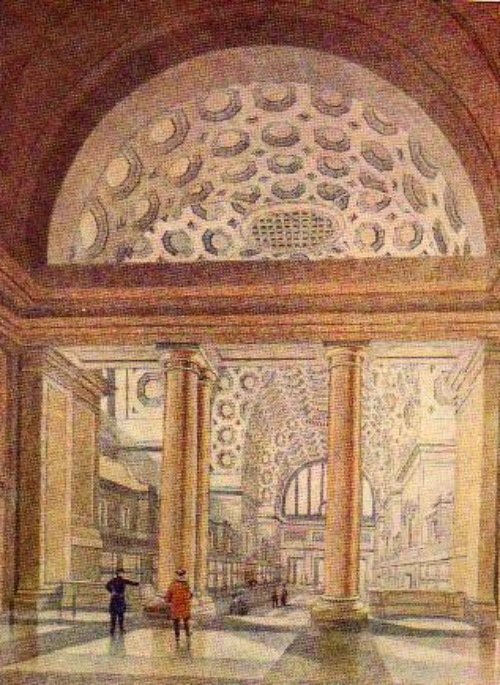
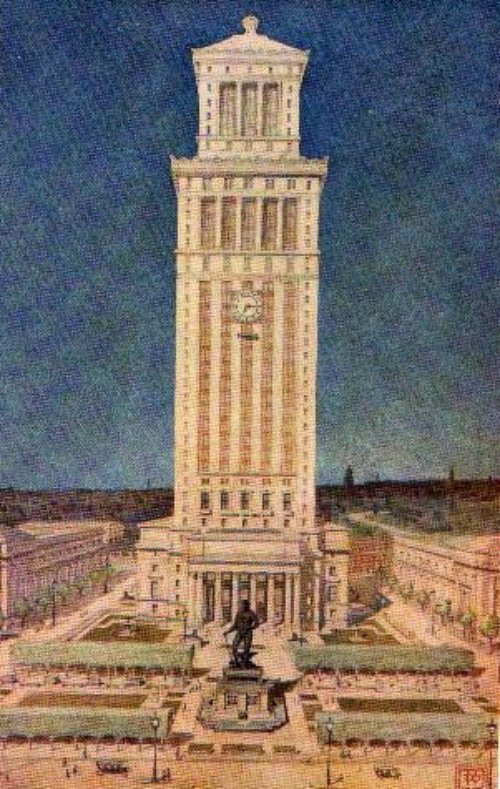
Beyond his direct architectural commissions, Haywood was a passionate advocate for urban planning and civic design. He was a founder member of The Birmingham Civic Society in 1918 and served as its honorary secretary for an impressive 29 years, until his retirement in 1947. In this role, he was instrumental in developing visions and schemes for replanning and improving Birmingham, publishing his influential ideas in The Development of Birmingham (1918). This work outlined ambitious proposals for the city, including improvements to New Street Station and a grand civic centre complex incorporating Baskerville House. He believed strongly in creating a more beautiful and functional city for its residents.
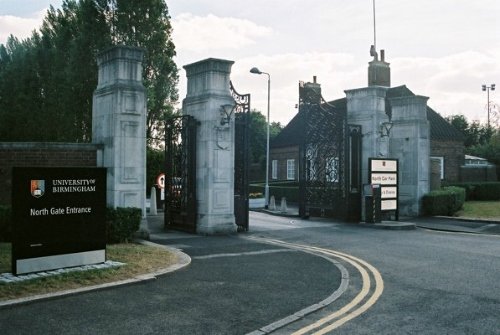
Haywood also designed various buildings in Birmingham, including the concrete Boy Scouts War Memorial in Cannon Hill Park, unveiled in 1924, the entrance to the University of Birmingham at Pritchatt’s Road.and he was responsible for the highly praised civic decorations for Birmingham’s 1937 Coronation celebrations.
Lasting legacy
Haywood lectured on Civic Design and Town Planning at Birmingham University, further cementing his influence on the next generation of architects and planners. He was elected a Fellow of the Royal Institute of British Architects (FRIBA) in 1912 and was also a Member of the Town Planning Institute (MTPI). He lived in Edgbaston for many years until his death on his 81st birthday, 2nd November 1957, in Selly Oak Hospital. His contributions to the built environment, his tireless efforts in civic advocacy, and his visionary planning schemes left an enduring legacy on Birmingham, shaping its appearance and guiding its development for decades.