Edgbaston Archery and Lawn Tennis Society is the oldest lawn tennis club in the world still in existence; its origins, however, were not in tennis, but in the aristocratic pursuit of archery.
From aristocratic arrows to tennis aces
The Society was formally founded as the Edgbaston Archery Society in 1860, the initial aim being to provide a genteel recreational outlet for the affluent residents of Edgbaston. Its first grounds were located on Hall Hill Road (now Edgbaston Park Road). The Society swiftly gained traction, with influential Birmingham families and individuals among its early members, including members of the Chance Glass founders and the Elkingtons (silver platers who crafted the Wimbledon men’s and women’s singles trophies).
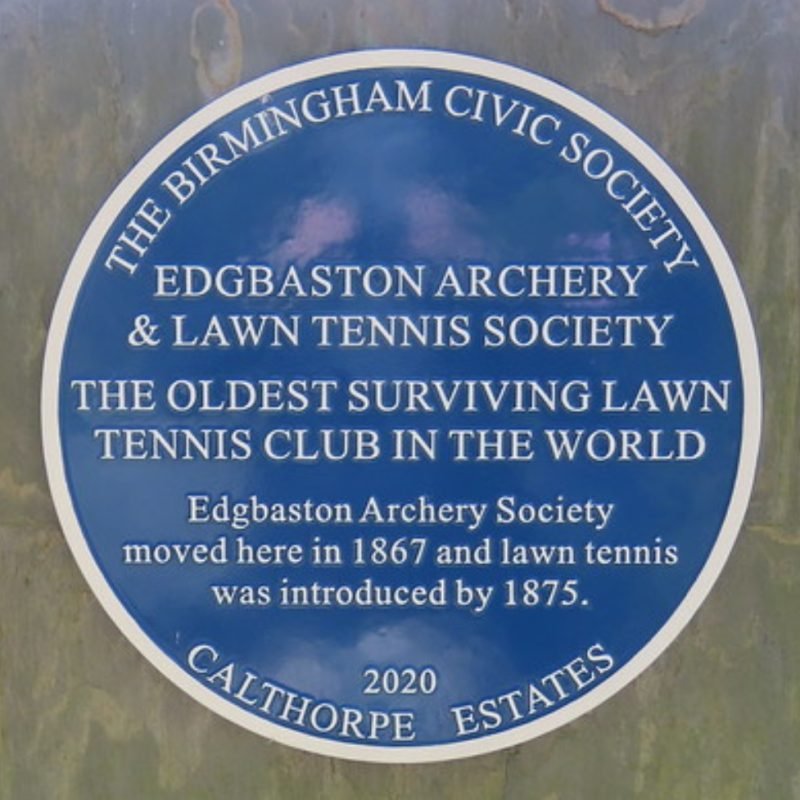
In 1867, the Society moved to its present premises adjacent to the Birmingham Botanical Gardens on Westbourne Road, a move partly driven by members who desired grounds closer to their large Edgbaston homes. The new site was acquired through a deal with the Botanical Gardens, which was facing financial difficulties and needed to monetise some of its land.
The game of croquet was introduced to the Society in March 1870, leading to a change in the club’s name to reflect this new activity. It was within this evolving sporting landscape that lawn tennis, a burgeoning new pastime, began to emerge.
The tennis revolution begins
Crucially, Birmingham is recognised as the birthplace of lawn tennis, largely thanks to Major Harry Gem (1819-1881) and his Spanish friend Augurio Perera. As early as 1859, they were experimenting with a precursor to lawn tennis, which they called “Pelota” or “Lawn Rackets,” in Perera’s garden on Ampton Road, Edgbaston. Harry Gem was a member of the Edgbaston Archery Society from 1864 to 1867. While there’s no direct proof he introduced the game alongside Archery, the Society undoubtedly played a crucial role in its early popularisation.
By 1875, lawn tennis was well-established at the Edgbaston Archery and Croquet Society, with fixture cards from that year clearly indicating that weekly meetings included “archery, croquet and lawn tennis,” and prizes were distributed for all three. This predates the first Wimbledon Championship by two years, solidifying the club’s claim as the oldest surviving tennis club. The enduring presence of its original grass courts in their 1875 positions makes them the oldest playing surfaces for lawn tennis anywhere in the world.
A living piece of history
Recognising the growing popularity of the new game, the Society formally changed its name at the AGM in 1877 to the Edgbaston Archery and Lawn Tennis Society. The club has maintained meticulous minute books since its inception in 1860, which are now held in the archives at the Birmingham Library, providing a rich chronicle of its history.