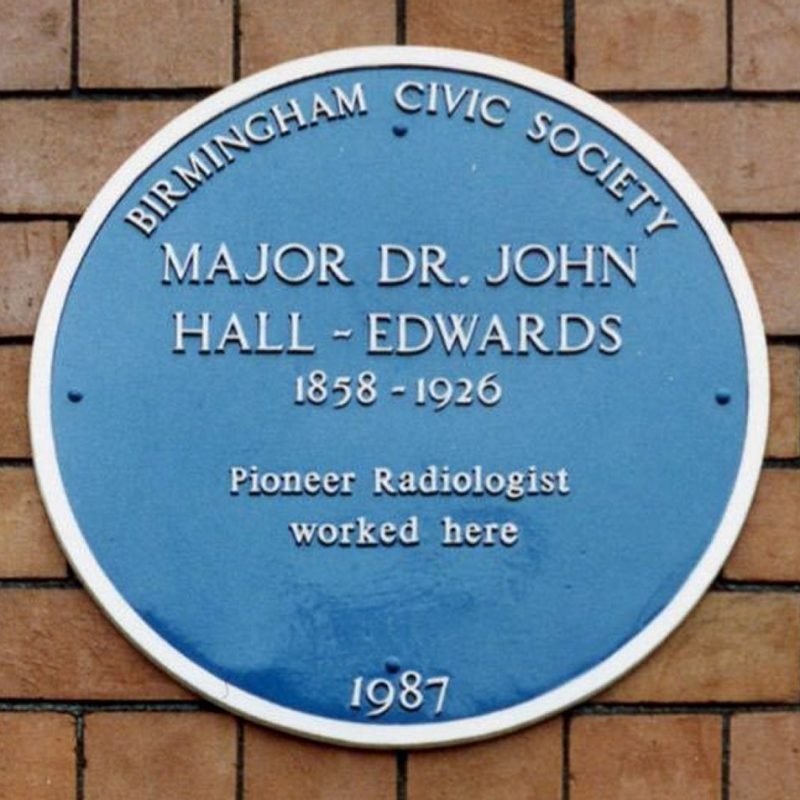
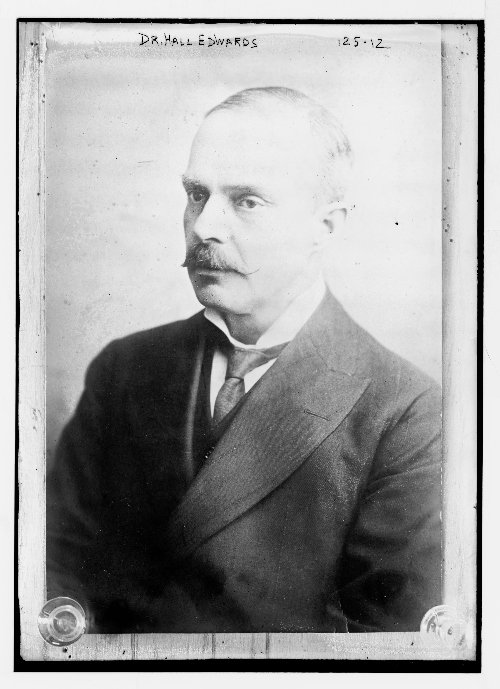
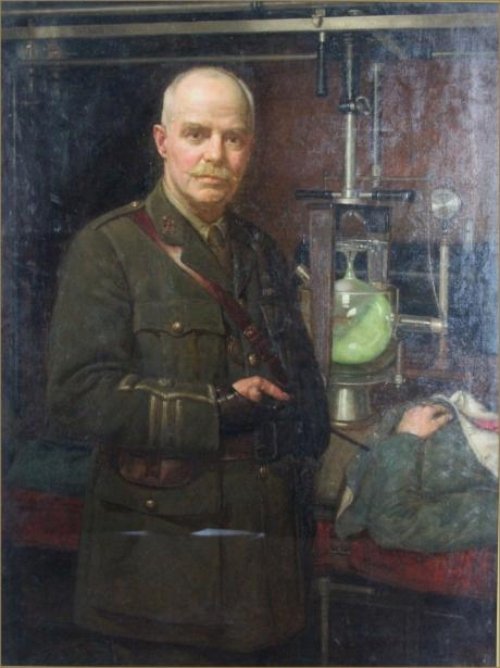
Major Dr John Hall Edwards was a pioneering British surgeon and radiographer, whose relentless pursuit of X-ray technology profoundly advanced medicine but ultimately cost him his own health.
Birmingham beginnings
Born on Moseley Road, Hall-Edwards received his education at King Edward VI Grammar School in Birmingham before studying medicine at Queen’s College Medical School, qualifying in 1885. Hall-Edwards initially developed a keen interest in photography, a skill he refined under the tutelage of Professor Richard Hill Norris, a surgeon and amateur photographer. He became president of the Midland Photographic Club from 1891-1893 and an honorary member of the Royal Photographic Society in 1895.
Medical history in the making
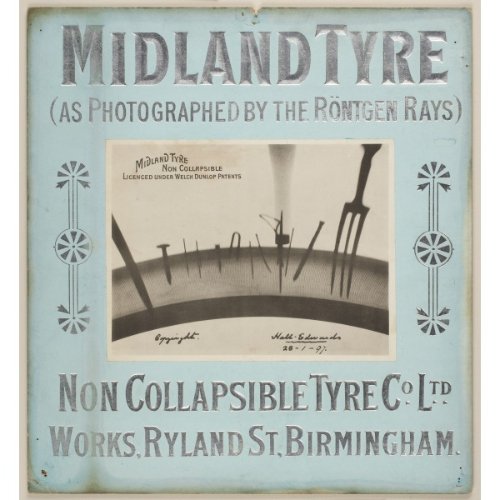
The year 1896 marked a turning point in his life. Following Wilhelm Röntgen’s discovery of X-rays in late 1895, Hall-Edwards quickly grasped the potential of this new technology. On 11th January 1896, he made one of the first clinical uses of X-rays, radiographing the hand of an associate to reveal a sterilised needle beneath the surface. A month later, on 14th February, he took one of the earliest radiographs to guide a surgical operation. He also produced one of the first X-rays of the human spine and gave an early public demonstration of X-rays in the UK on Hodge Hill Common in March 1896.
Military pioneer
In 1899, Hall-Edwards was appointed the first Surgeon Radiographer at the Birmingham General Hospital, also overseeing X-ray departments at the Orthopaedic, Children’s, and Eye hospitals. His expertise was in high demand. In February 1900, he joined the Warwickshire Regiment as the first military radiographer, serving in the Boer War in South Africa. His work proved the utility of X-rays in military surgery, assisting in locating bullets and shrapnel.
The terrible price of progress
Tragically, Hall-Edwards’s pioneering work came at a severe personal cost due to the then-unknown dangers of radiation. He developed severe X-ray dermatitis, a form of cancer. In 1908, his left arm had to be amputated at the elbow, and four fingers on his right hand were later removed, leaving him with only a thumb. Despite these profound disabilities and constant pain, he continued to practice and advocate for safer X-ray practices, even teaching himself to paint landscapes with his remaining thumb and an artificial finger.
He also served as a City of Birmingham Councillor from 1920 to 1925, sitting on the Public Health Committee and promoting understanding of cancer. Major Dr. John Hall-Edwards died of cancer at his home in Edgbaston on 15th August 1926. His name is one of 169 inscribed on the Radiation Martyrs’ Memorial in Hamburg, Germany, a solemn tribute to those who sacrificed their lives for the advancement of radiology. His amputated left hand is preserved by the University of Birmingham Museum as a specimen demonstrating the effects of radiation.