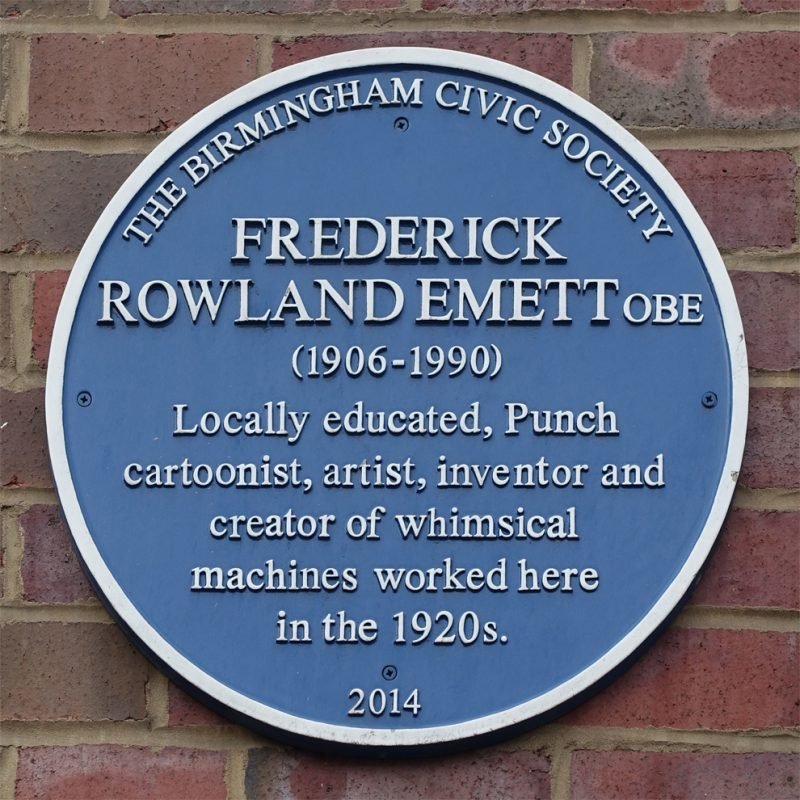
Universally known as Rowland, Emett was a distinctive English cartoonist, artist, and a celebrated creator of whimsical, elaborate kinetic sculptures.
A young inventor’s Birmingham beginnings
Born in New Southgate, London, Emett’s family moved to Birmingham, and he was educated at Waverley Grammar School in the city, where his talent for drawing was evident from an early age. He even patented a gramophone volume control at just 14 years old, showcasing his early inventive streak. He went on to study at the Birmingham School of Arts and Crafts, further developing his artistic skills. One of his landscape paintings, “Cornish Harbour,” was exhibited at the Royal Academy and is now held in the Tate collection.
From Punch magazine to national fame
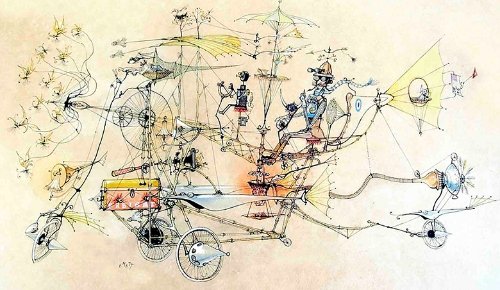
Emett’s career as a cartoonist truly began in the late 1930s when he started contributing to Punch magazine, quickly becoming one of their most popular artists. His distinctive style featured outlandish, bumbling trains with excessively tall chimneys and silly names, along with other charmingly absurd contraptions. During the Second World War, he worked as a draughtsman for the Air Ministry, which further honed his understanding of engineering, albeit often with a humorous twist.
Bringing dreams to life
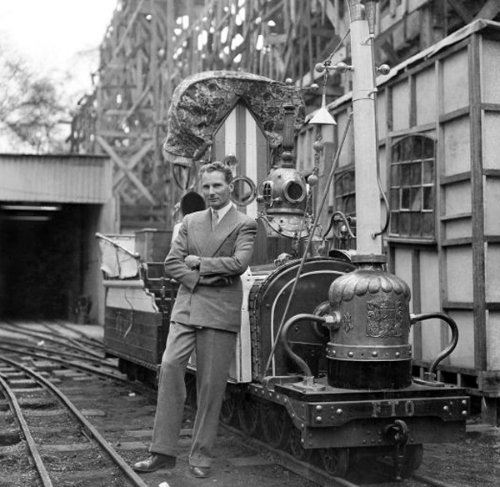
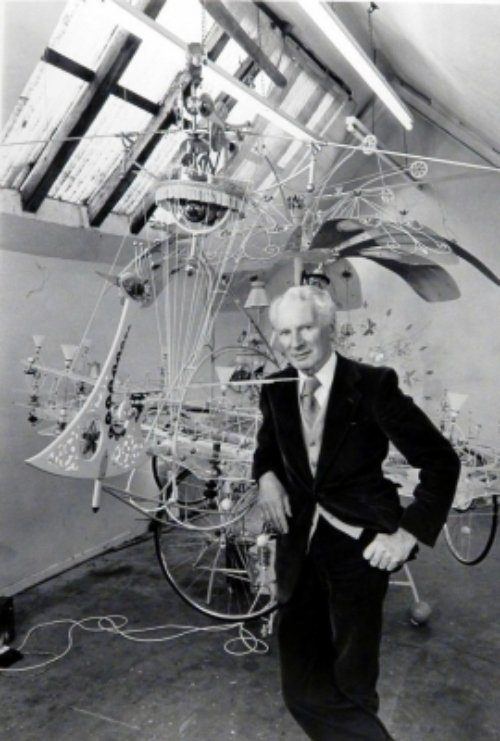
A pivotal moment in his career came in 1951, when his cartoon ideas were brought to life for the Festival of Britain. His “Far Tottering and Oyster Creek Branch Railway,” featuring real-life versions of his cartoon locomotives like ‘Nellie,’ became one of the festival’s most beloved attractions. This success led to a new career as a designer and constructor of his famous “things” – intricate, comical, and often water-powered machines. Emett’s whimsical creations gained international recognition, and he was commissioned by various companies and institutions.
The magic of mechanical whimsy
Perhaps his most famous work came from his involvement in the 1968 film Chitty Chitty Bang Bang, for which he designed the fantastical inventions of Caractacus Potts, played by Dick Van Dyke. He was awarded the OBE in 1978 for his services to art. Rowland Emett died in 1990.